




Mastering Full-Body Strength and Flexibility with Resistance bands

Resistance bands
This article explores Resistance bands, including its background, practical context, and real-world significance.
Achieving a balanced, resilient physique does not require a room full of heavy machinery; sometimes, the most versatile tools are the simplest. Whether you are looking to build core stability, sculpt your upper body, or enhance flexibility, incorporating elastic training tools can completely transform your daily routine.
Understanding Elastic Resistance Training
Unlike traditional iron weights that rely entirely on gravity, elastic resistance training provides variable tension throughout the entire movement. As the material stretches, the resistance increases, matching your muscles' natural strength curve. This dynamic tension engages stabilizing muscles that are often neglected during standard weightlifting exercises.
According to a study published in the National Institutes of Health, elastic resistance training yields significant improvements in muscle strength and functional performance comparable to conventional resistance training machines. This makes it an exceptionally efficient option for both rehabilitation and advanced athletic conditioning.
The Versatility of Tube Pedal Pullers
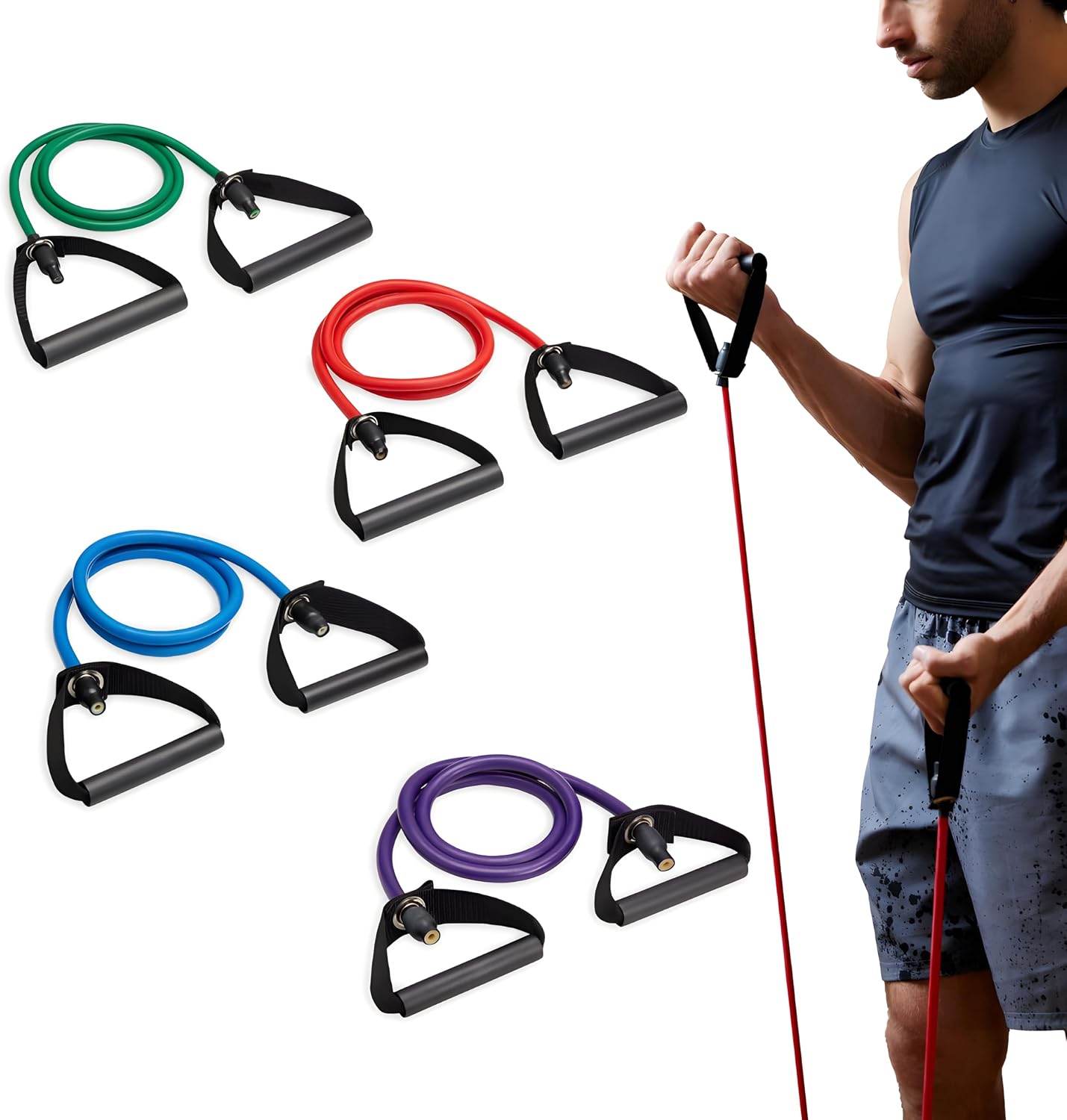
A specialized variation gaining popularity in home fitness routines is the 4-tube elastic pedal pull resistance band set. This design combines foot pedals with sturdy latex tubes and ergonomic handles, allowing for seamless transitions between upper and lower body movements.
When performing seated row movements or upright pulls, the foot pedals secure the base while the four tubes deliver a smooth, progressive load. This configuration minimizes awkward grips and distributes tension evenly across the shoulders, back, and arms.
Core Exercises for Full-Body Conditioning
To maximize your results, focus on compound movements that recruit multiple muscle groups simultaneously. Integrating these exercises into a structured weekly routine ensures balanced muscular development.
- Seated Abdominal Pull-Ins: Sit on the floor with your feet secured in the pedals, gripping the handles to draw your knees toward your chest while engaging your core.
- Standing Arm Curls: Place your feet firmly on the pedals and curl the handles upward, keeping your elbows locked to your sides for optimal bicep activation.
- Upright Rows: Stand upright with feet secured, pulling the handles toward your chest to target your shoulders and upper traps.
Real-World Case Study: Functional Recovery and Mobility
Consider the experience of Sarah, a 42-year-old office worker recovering from mild lower back strain and looking for a low-impact strength routine. Traditional dumbbells strained her wrists and lower back during transitions, leading to inconsistent workouts.
By switching to a multi-tube pedal puller system, Sarah was able to perform controlled rowing and stretching exercises without compressive spinal loads. Within six weeks, she reported improved posture, increased core endurance, and zero joint discomfort during her daily sessions.
Best Practices for Safe and Effective Training
Maximizing the lifespan of your equipment and ensuring injury-free workouts requires proper handling and maintenance habits. Always inspect your gear before each session to guarantee structural integrity.
- Check all latex tubes regularly for micro-tears, excessive wear, or loose handles.
- Perform movements in a controlled manner, avoiding sudden snapping or over-stretching beyond the recommended capacity.
- Store your equipment away from direct sunlight and extreme temperatures to prevent the rubber material from degrading prematurely.
Conclusion
Incorporating progressive elastic conditioning into your fitness regimen offers a practical, highly adaptable pathway to long-term strength and mobility. By focusing on controlled execution and versatile equipment like a 4-tube elastic pedal pull resistance band set, you can achieve a comprehensive workout anywhere.
Sources
"""
LuckeLadybug
Noticias
Mastering the "내일 날씨" Search: How to Accurately Predict Tomorrow's Weather in Korea


