



Womens Lingerie That Fits Better: A Practical Guide to Choosing Comfortable Briefs

The best underwear is often the pair you stop noticing once it is on. When choosing Womens Lingerie, understanding fit, fabric, construction, and skin contact can make the difference between a brief that works comfortably all day and one that constantly needs adjusting.
Start With Fit, Not Just the Size on the Label
Underwear sizing is useful as a starting point, but the way a brief sits on your body matters more than the number or letter printed on its label. Waist height, leg openings, stretch, seam placement, and fabric recovery all influence the actual fit.
A well-fitting brief should sit securely without requiring frequent adjustment. Watch for deep pressure marks, persistent rolling, pinching at the leg openings, or fabric that repeatedly shifts during ordinary movement.
When deciding between sizes, compare your measurements with the garment's specific size chart rather than assuming that the same labeled size will fit identically across different designs.
Understand What Low-Rise Really Changes
Low-rise briefs are designed to sit lower on the torso than traditional higher-rise underwear. This makes them particularly useful beneath low- or mid-rise pants, skirts, and other garments where a taller waistband might extend above the outer layer.
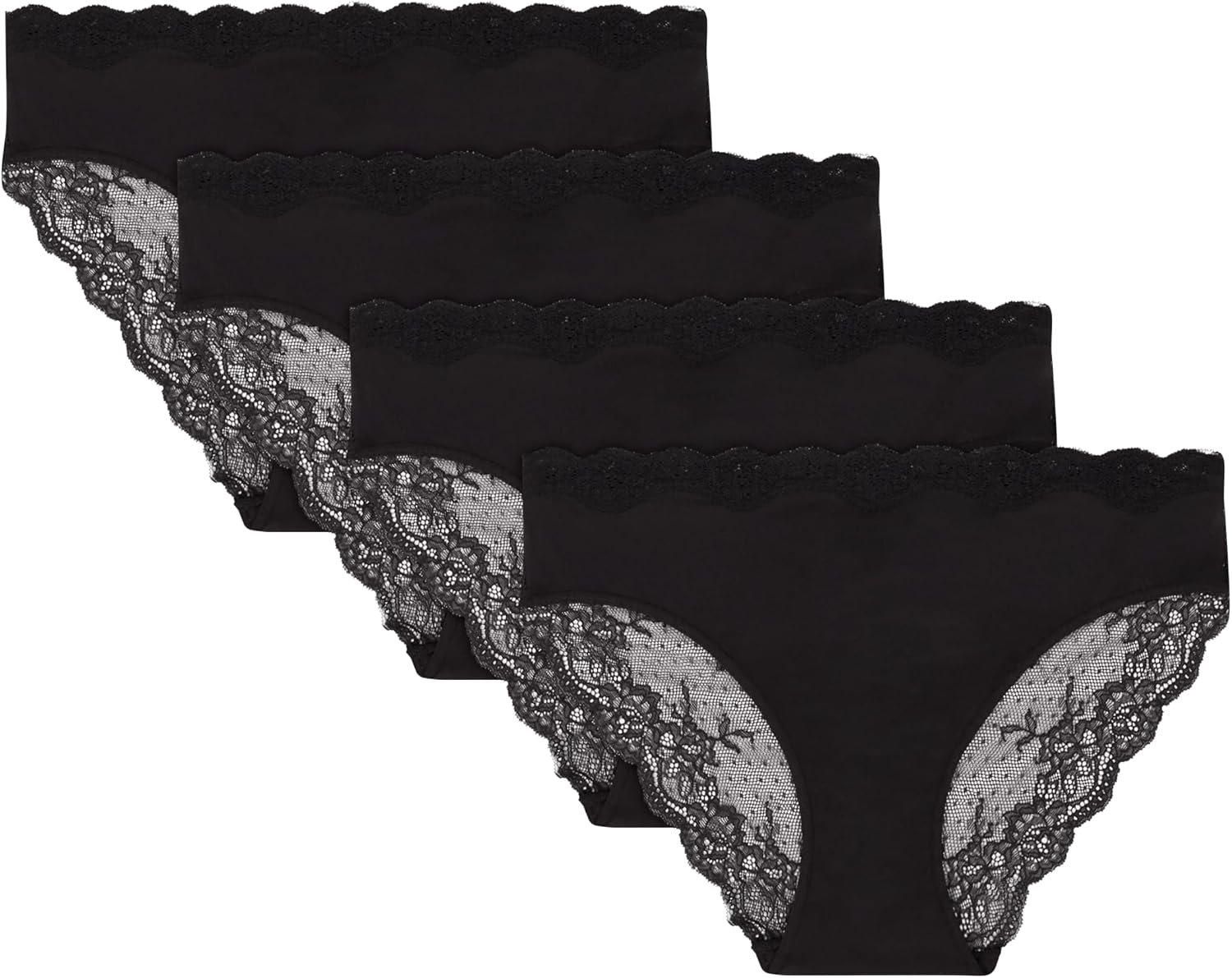
The newly listed Womens Floral Lace Low Rise Briefs provide a useful example. Their design combines a low-rise brief silhouette with floral lace and a fabric composition of 85% nylon and 15% spandex.
That combination illustrates an important principle: style and function do not have to be considered separately. The floral lace supplies visual texture, while the nylon-spandex construction is intended to create a lightweight, fitted silhouette.
Pay Attention to the Crotch and Skin-Contact Areas
A beautiful fabric composition does not tell you everything about an underwear garment. The construction of the area directly contacting the vulva deserves particular attention.
The American College of Obstetricians and Gynecologists advises wearing underwear that is not tight-fitting and recommends underwear with a cotton panel. ACOG also emphasizes avoiding unnecessary scented products and other potential vulvar irritants. American College of Obstetricians and Gynecologists
That means a consumer evaluating lace or synthetic briefs should check details beyond the main shell fabric:
Is there a separate crotch lining or gusset?
What material is used for that panel?
Do seams feel smooth against the skin?
Do the leg openings feel secure without digging in?
Does the garment remain comfortable after several hours?
If the gusset material is not specified, do not assume that it is cotton simply because cotton gussets are common.
Lace Can Be Comfortable, but Construction Matters
"Lace" describes a textile structure or decorative treatment rather than a single fiber. Lace underwear can therefore vary dramatically in softness, elasticity, thickness, surface texture, and durability.
For sensitive skin, pay attention to how much textured lace directly contacts the body. A decorative lace section positioned away from high-friction areas may feel very different from coarse lace running along a tightly fitted leg opening.
The American Academy of Dermatology notes that fabrics, dyes, and other substances contacting the skin can contribute to contact dermatitis in susceptible people. It also recommends washing new clothing before wearing it when contact dermatitis is a concern. American Academy of Dermatology
Know What Nylon and Spandex Contribute
A blend such as 85% nylon and 15% spandex serves a different purpose from an all-cotton fabric. Nylon can create a lightweight, smooth textile, while spandex supplies substantial stretch and helps a close-fitting garment move with the body.
The practical question is not simply whether synthetic fibers are "good" or "bad." Instead, consider whether the particular garment provides the fit, crotch construction, softness, and moisture management that work for you.
For example, someone might enjoy a fitted nylon-spandex lace brief underneath a smooth dress for a few hours but prefer looser cotton underwear for sleeping. Different situations can justify different choices.
Use a Quick Fit Test at Home
A short movement test can reveal problems that are difficult to identify while standing still.
After putting on a new pair of briefs, try this sequence:
Walk normally for several minutes.
Sit down and stand up several times.
Bend forward and squat comfortably.
Check whether the waistband has rolled or shifted.
Notice whether the leg openings have started digging into the skin.
Check whether seams or lace have become irritating.
The goal is not to achieve a mathematically perfect fit. You are looking for underwear that remains comfortably positioned during the movements that make up your normal day.
Treat Persistent Irritation as Useful Information
Repeated itching, burning, redness, or discomfort should not simply be accepted as the price of wearing a particular style. Possible irritants can include fabric texture, dyes, fragrance, detergent residue, or other materials contacting the skin.
The American Academy of Dermatology explains that contact dermatitis can produce itching, rash, dryness, tenderness, burning, or stinging. Persistent or recurring symptoms warrant evaluation by a qualified healthcare professional rather than repeated experimentation with irritating products. American Academy of Dermatology
ACOG similarly recommends gentle vulvar care and avoiding tight-fitting underwear and potential irritants. American College of Obstetricians and Gynecologists
Look at Textile Certifications Carefully
Textile certifications can provide additional information, but only when a garment actually carries the certification. Never infer certification from the fabric type, country of manufacture, appearance, or product category.
For example, OEKO-TEX STANDARD 100 covers textiles tested against specified harmful substances. Its requirements become stricter as expected skin contact increases, and underwear falls within its direct-skin-contact classification. OEKO-TEX
If such a certification matters to you, look for a verifiable label or certificate rather than assuming that similar-looking garments meet the same standard.
Wash Underwear According to Its Actual Care Label
Delicate lace and stretch fibers can require different treatment from heavier everyday cotton garments. Always begin with the manufacturer's care instructions because temperature, agitation, bleach, and drying methods can affect different textiles differently.
For general household laundry, the Centers for Disease Control and Prevention recommends using detergent, following the recommended water temperature, and drying laundry completely. Centers for Disease Control and Prevention
For delicate underwear, a mesh laundry bag can also help keep hooks, lace, and straps from becoming entangled with other garments when machine washing is permitted by the care label.
Build a Lingerie Drawer Around Different Needs
There is little reason to expect one underwear style to handle every situation equally well. A more practical approach is to keep several silhouettes and materials suited to different clothing and activities.
For example:
Low-rise briefs: useful beneath lower-waisted clothing.
Smooth fitted briefs: practical when reducing visible texture under close-fitting garments is important.
Lace briefs: add decorative texture while retaining the familiar brief silhouette.
Cotton-focused styles: useful when breathability and soft everyday skin contact are priorities.
Higher-rise briefs: provide greater abdominal coverage for people who prefer it.
A floral lace low-rise brief fits naturally into this kind of wardrobe as a decorative, lower-waisted option rather than something that must replace every other underwear style.
Make Comfort the Final Test
Good lingerie should work with your body and your clothing rather than demanding constant attention. Check the rise, leg openings, gusset material, fabric composition, seams, stretch, and care requirements instead of judging a brief by appearance alone.
Use your own experience as the final test: if a style stays comfortably in place, works beneath the clothes you wear, and does not cause persistent irritation, it has earned its place in your lingerie rotation.
Sources
American College of Obstetricians and Gynecologists
American College of Obstetricians and Gynecologists
American Academy of Dermatology
American Academy of Dermatology
Centers for Disease Control and Prevention
LuckeLadybug
Noticias
Jordan Elliott: NFL Career, Defensive Tackle Skills, and What Makes Him Effective


