


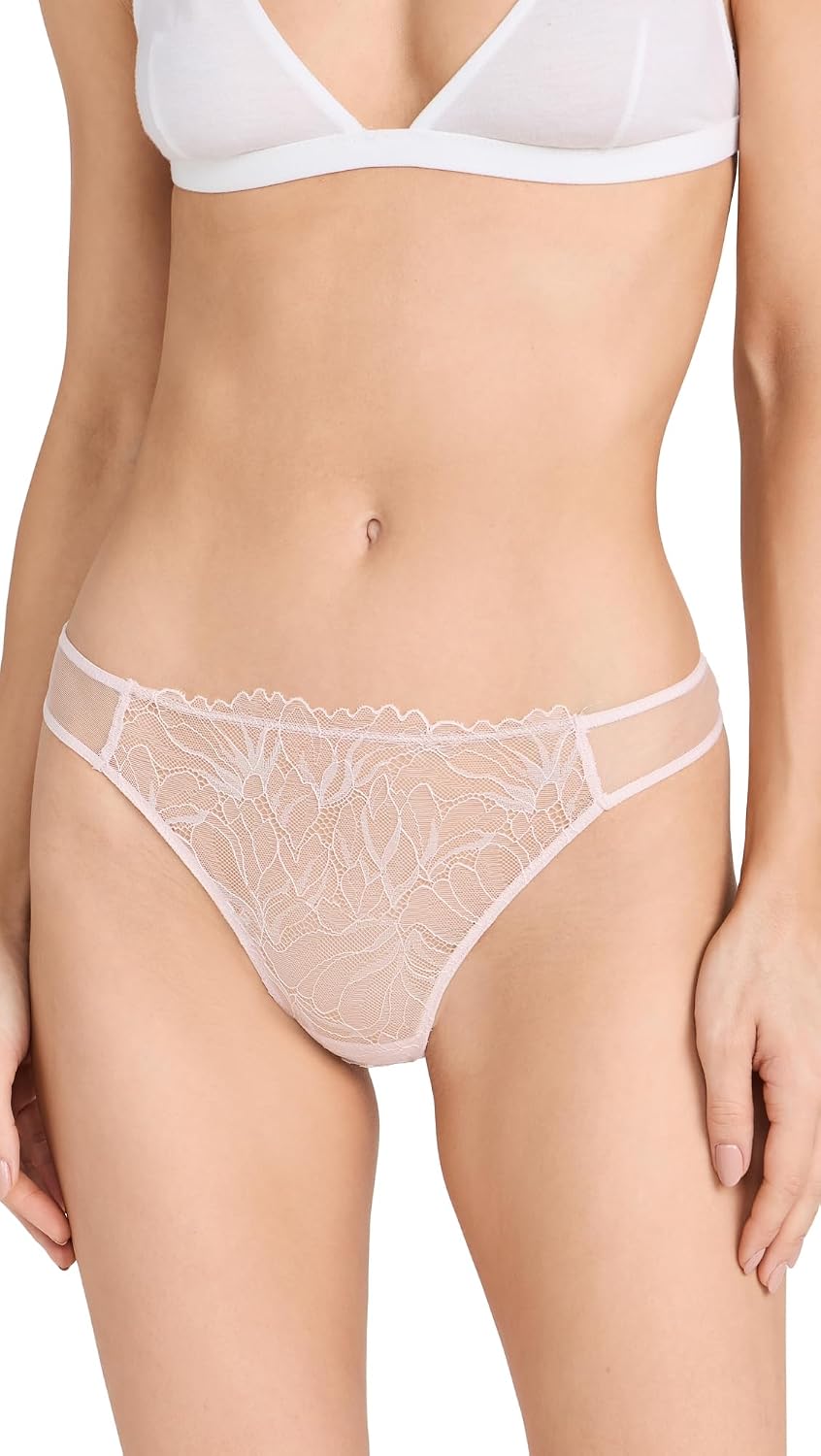

Womens Lingerie Guide: How to Choose Comfortable Lace Panties That Fit Well

The prettiest lingerie still has to work for your body. When choosing sheer lace panties—especially low-rise G-string styles—the details that matter most are fit, fabric, construction, and how the garment feels during the hours you actually plan to wear it.
Start With Fit, Not the Size Label
A well-fitting pair of panties should stay in position without excessive digging, bunching, or constant adjustment. Because sizing can differ between garments, checking body measurements against the relevant size chart is generally more useful than relying on the letter or number on the label alone.
For a low-rise G-string, pay particular attention to the hip measurement and waistband placement. Low-rise designs sit lower on the torso, so someone accustomed to high-rise underwear may find the same nominal size feels noticeably different.
A simple fitting check is to move naturally after putting the garment on:
Sit and stand several times.
Walk around for a few minutes.
Check whether the waistband rolls or digs into your skin.
Make sure lace edges are not creating uncomfortable pressure.
Confirm that the garment remains comfortably positioned without repeated adjustment.
If several of these checks fail, a different size or cut may be more suitable than simply accepting discomfort as part of wearing lingerie.
Understand What Nylon and Spandex Contribute
Fabric composition can tell you quite a bit about how Womens Lingerie is likely to behave. A sheer lace low-rise G-string made from 85% nylon and 15% spandex, for example, combines a predominantly synthetic fabric with a significant stretch component.
Nylon is commonly used in intimate apparel because it can produce lightweight, smooth, and fine fabrics. Spandex—also known generically as elastane—is valued for its ability to stretch substantially and recover toward its original dimensions.
The Federal Trade Commission provides consumer information about textile fiber terminology and labeling, including manufactured fibers used in clothing. Federal Trade Commission
Fabric percentages, however, do not tell the entire comfort story. Lace texture, elastic tension, seams, garment dimensions, and individual sensitivity can make two pieces with similar fiber compositions feel very different.
Know What a Low-Rise G-String Changes
Panty silhouettes are not interchangeable. A G-string intentionally uses minimal rear coverage, while a low-rise waistband positions the garment lower around the hips.
That combination can be useful when someone wants minimal fabric underneath close-fitting clothing. It also means that correct sizing and comfortable elastic tension become particularly important because there is less fabric available to distribute pressure.
Consider the intended situation before choosing this cut. For example, someone selecting underwear for a fitted evening outfit may value minimal coverage, whereas someone preparing for a long day of walking or sitting may prefer a brief or another style with more coverage.
Neither choice is inherently better—the practical question is which construction suits the activity and the wearer's preferences.
Look Beyond the Appearance of Lace
Sheer lace creates visual texture while keeping a garment lightweight, but photographs cannot tell you exactly how a particular lace will feel against your skin.
Examine the construction wherever possible. Areas worth checking include:
The softness and flexibility of lace edges
Waistband width and elasticity
Seam placement
Stretch through the hips
The construction of the gusset
Care instructions on the garment label
This is particularly important for minimal silhouettes. A decorative edge that feels insignificant during a quick fitting can become much more noticeable after several hours.
Pay Attention to the Gusset
The gusset is the section of fabric positioned at the crotch of underwear. Its material and construction deserve consideration independently from the fabric used throughout the rest of the garment.
For example, knowing that the primary body of a pair of panties is nylon and spandex does not establish what fiber is used in its gusset. Check the garment information or label rather than assuming it is cotton or another particular material.
That distinction is useful when comparing lingerie because two visually similar designs may have different constructions in the area that remains in prolonged contact with the body.
Treat Comfort as Individual
There is no universal lingerie silhouette that feels best on everyone. Body shape, skin sensitivity, movement, climate, clothing worn over the underwear, and personal preference all affect comfort.
Imagine two people considering the same sheer lace low-rise G-string. One wants underwear underneath a fitted dress for a few hours and appreciates the minimal rear coverage; the other wants something for an all-day itinerary involving commuting and considerable walking.
The first person might find the minimal construction particularly suitable. The second might discover that a fuller brief, bikini, or another cut better matches the day's activities.
That is why practical lingerie selection starts with how and when you will wear it, rather than appearance alone.
Use Clothing as Part of the Decision
Underwear and outer clothing function as a system. Waist height, fabric thickness, garment fit, and seam placement can determine whether a particular panty style works underneath an outfit.
A low-rise G-string may pair naturally with low- or mid-rise bottoms when the wearer wants the underwear waistband positioned below the outer garment's waistline. Minimal rear fabric can also reduce the amount of underwear material beneath closely fitted clothing, although seam visibility still depends on the specific construction and fabrics involved.
Before an important event, try on the complete outfit rather than evaluating the underwear separately. Walk, sit, bend, and view the outfit under ordinary lighting to see how everything behaves together.
Care for Delicate Lingerie According to Its Label
Lace and stretch fibers benefit from appropriate care, but the manufacturer's care label should be the primary guide for a particular garment.
The Federal Trade Commission's Care Labeling Rule requires covered textile wearing apparel sold in the United States to carry care instructions that provide a regular care method and warnings when appropriate. Federal Trade Commission
For delicate underwear, good habits include reading the label before the first wash and avoiding assumptions based solely on appearance. If the label specifies hand washing, particular temperatures, drying restrictions, or other precautions, follow those instructions.
Replace Underwear Based on Condition, Not an Arbitrary Calendar
There is no single evidence-based replacement schedule that applies to every pair of panties. Frequency of wear, washing practices, fabric quality, elastic construction, and rotation all influence how quickly a garment deteriorates.
Instead, inspect lingerie periodically. Replacement may make sense when:
Elastic no longer recovers adequately.
The garment repeatedly shifts because its shape has changed.
Lace or seams have significant damage.
The fabric has become uncomfortable.
The fit has changed enough that the garment no longer functions as intended.
This condition-based approach is more useful than discarding perfectly functional underwear according to a universal deadline.
A Practical Womens Lingerie Checklist
When evaluating a new pair, ask five questions: Does the cut suit the occasion? Does the size allow comfortable movement? Do I understand the main fabric composition? Does the construction feel comfortable against my skin? Can I realistically follow its care instructions?
For sheer lace low-rise G-string panties, those questions are especially useful because the design intentionally combines minimal coverage with delicate-looking fabric and a lower waistband.
The best next step is simple: evaluate lingerie as clothing you will actually live and move in. A style that looks appealing and remains comfortable through normal movement is far more likely to earn a regular place in your wardrobe.
Sources
Federal Trade Commission — Care Labeling Rule
LuckeLadybug
Noticias
How to Plan a Seamless Trip to Your Final Destination Without Travel Friction


