


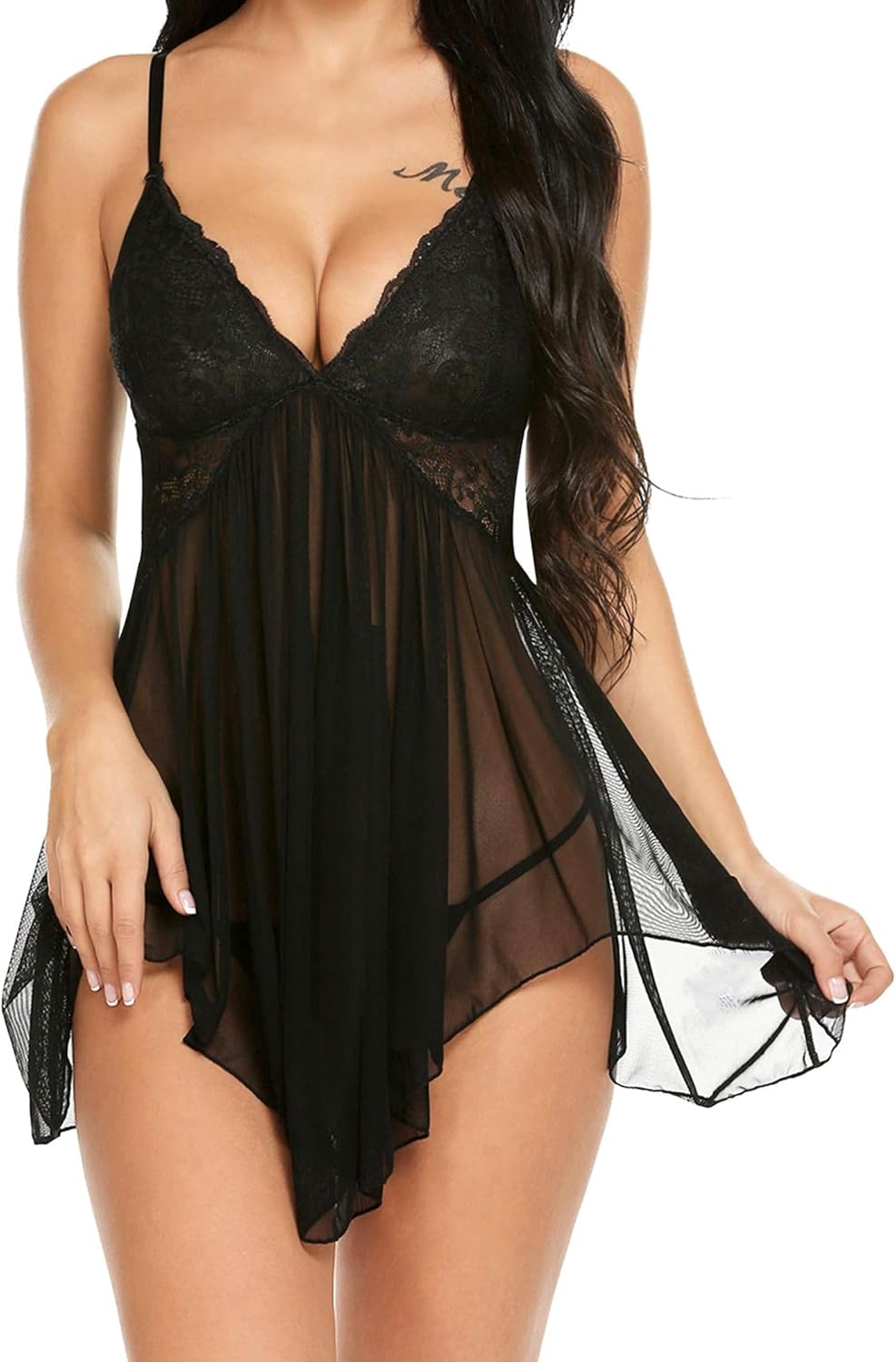

Womens Lingerie for Sleep: How to Choose a Sheer Nightgown Set for Comfort, Fit, and Easy Care

The most attractive sleepwear is rarely the piece that merely looks good on a hanger—it is the one you can actually relax in. When choosing Womens Lingerie for nighttime wear, paying attention to fit, construction, skin contact, and care can make the difference between a set you repeatedly reach for and one that stays in the drawer.
Start With How You Plan to Wear It
A sheer knit nightgown and coordinated underwear set combines two different priorities: the flowing appearance of a nightdress and the closer fit of intimate apparel. That makes intended use an important first consideration.
For relaxed evenings, prioritize a nightgown that allows you to sit, stretch, and sleep without significant pulling. If the set is mainly for occasional wear, decorative details and a more structured silhouette may carry greater weight, provided nothing pinches or rubs.
Before deciding whether a lingerie set feels right, ask yourself:
Will I actually sleep in it or mainly wear it before bed?
Do I prefer a loose nightgown or close-fitting sleepwear?
Does the underwear remain comfortable when sitting and lying down?
Are there seams, edges, hardware, or molded areas that press against my skin?
Will the sheer construction provide the amount of coverage I want?
Those questions are more useful than choosing by appearance alone.
Understand What Sheer Knit Construction Changes
Knit construction generally allows a textile to conform to the body differently from a rigid woven fabric, but the exact stretch and recovery depend on the fibers and knitting method. A product being described simply as "knit" therefore doesn't tell you everything about how it will fit.
Sheerness is another characteristic worth evaluating separately from softness. A transparent or semi-transparent fabric can be lightweight without necessarily being especially soft, stretchy, or breathable.
When the fiber composition isn't known, avoid assuming that a sheer fabric is automatically nylon, polyester, cotton, or another specific material. Check the garment's fiber label instead.
Evaluate the Nightgown and Underwear Separately
A coordinated set may look like a single outfit, but each component interacts with your body differently. The nightgown can fit comfortably while the underwear is too tight—or the reverse.
For the nightgown, look at shoulder or strap placement, bust room, torso length, hem length, and how freely the fabric moves. Raise your arms, sit down, and bend slightly to see whether the garment rides up or creates uncomfortable tension.
For the underwear, pay closer attention to waistband and leg openings. Ideally, these should stay in position without digging into the skin or requiring constant adjustment.
This distinction is particularly useful with a sheer knit nightgown and lingerie set featuring thin molded cups. The cup structure introduces another fit point, so the bust area deserves the same careful evaluation you would give a bra rather than treating it simply as part of a loose nightdress.
Use a Quick At-Home Fit Test
You can learn considerably more from five minutes of normal movement than from standing still in front of a mirror.
Try this simple test:
Stand naturally. Check whether straps, cups, seams, and waistbands sit where intended without adjustment.
Raise both arms. Notice excessive riding, pulling, or shifting.
Sit for a few minutes. Look for edges that suddenly dig into the skin.
Walk around. Check whether the underwear moves or the nightgown twists.
Lie in your usual sleeping position. If this is genuine sleepwear, this is the test that matters most.
For example, imagine two people choosing the same fitted sheer nightgown. One primarily wants something for an hour of evening wear, while the other intends to sleep eight hours in it; the second person may reasonably put much more emphasis on unrestricted movement and minimal hardware pressure.
That illustrates why there is no universally "best" lingerie fit. The best choice depends partly on what you expect the garment to do.
Pay Attention to Skin Sensitivity and Breathability
Fabric next to intimate areas deserves additional consideration, particularly if you're susceptible to irritation. Cleveland Clinic recommends breathable cotton underwear for regular wear and notes that people experiencing recurring vulvar problems may benefit from looser, more breathable choices. Cleveland Clinic
That doesn't mean every lingerie piece must be cotton. Decorative or synthetic lingerie can still have a place in a wardrobe, but someone with sensitive skin may prefer breathable everyday underwear for extended wear and reserve less breathable styles for shorter periods.
The American Academy of Dermatology also advises people dealing with dry or easily irritated skin to consider soft fabrics and fragrance-free laundry detergent. American Academy of Dermatology
If a particular garment repeatedly causes itching, burning, or persistent irritation, discontinue wearing it and consider discussing continuing symptoms with a healthcare professional rather than assuming the problem is simply an inconvenient fit.
Don't Confuse a More Structured Look With Better Support
Terms such as molded cup, underwire, push-up, padded, and bralette describe different construction features. They shouldn't automatically be interpreted as equivalent levels of support.
For a nightgown with thin molded cups, check the actual fit. The cup should accommodate the breast comfortably without obvious compression, significant gaping, or a cup edge that cuts into the tissue.
If the garment includes rigid hardware, also check its position while sitting and reclining. A feature that feels unobtrusive while standing may feel quite different once you are lying down.
Check Coverage in Realistic Lighting
Sheer lingerie can change dramatically under different lighting conditions. Fabric that appears relatively opaque in a dim bedroom may reveal considerably more when placed near a bright window or under direct overhead lighting.
If coverage matters to you, examine the garment:
In ordinary room lighting
Near natural daylight
From the front and back
While standing and bending
Over the underwear you intend to wear with it
This is especially relevant for coordinated sheer sets because the contrast between the nightgown and underwear may be an intentional part of the overall appearance.
Let the Care Label Override Generic Lingerie Advice
"Delicate" doesn't automatically mean "hand wash," and lingerie should not be assigned a washing temperature simply because of its appearance. Different fibers, elastic components, molded cups, trims, and structural elements can require different treatment.
The U.S. Federal Trade Commission's Care Labeling Rule requires covered textile apparel to carry appropriate regular-care instructions, including necessary warnings about procedures that could harm the garment. Federal Trade Commission
So make the sewn-in care label your primary guide.
A sensible routine is to:
Read the label before the first wash.
Follow its specified washing and drying method.
Keep pieces with hooks or hardware from snagging delicate material.
Avoid automatically applying high heat to an unknown fiber blend.
Store molded pieces without crushing their cups.
Cleveland Clinic also recommends washing new underwear before wearing it and notes that fragrance- and dye-free detergents may be preferable for people prone to vulvar irritation. Cleveland Clinic
Build a Sleepwear Wardrobe Around Different Needs
A useful lingerie drawer doesn't have to make one style perform every job. Separating everyday sleepwear from more decorative pieces can make choosing what to wear much easier.
For example, a practical rotation might include a loose nightgown for warm nights, breathable underwear for extended everyday wear, warmer pajamas for cooler conditions, and a sheer coordinated nightgown set when you want a more delicate or dressed-up look.
That approach also reduces the temptation to tolerate uncomfortable lingerie simply because it looks appealing.
The Takeaway
When evaluating Womens Lingerie such as a sheer knit nightgown and coordinated underwear set, consider the entire experience: coverage, movement, cup fit, skin contact, breathability, intended wear time, and care requirements.
Try the garment in the positions in which you'll actually wear it, verify its material and care information from the labels, and prioritize comfort when a piece will remain against your skin for hours. A beautiful nightgown becomes much more useful when its fit and function work as well as its appearance.
Sources
U.S. Federal Trade Commission — Care Labeling of Textile Wearing Apparel & Certain Piece Goods
Cleveland Clinic — How Underwear Impacts Vaginal Health
American Academy of Dermatology — Cold Weather and Your Skin
LuckeLadybug
Noticias
Jordan Elliott: NFL Career, Defensive Tackle Skills, and What Makes Him Effective


