




The Ultimate Guide to Selecting and Wearing Sunglasses for Eye Health and Performance

The Ultimate Guide to Selecting and Wearing Sunglasses for Eye Health and Performance
When stepping into bright sunlight, most individuals instinctively remember to apply sunscreen to shield their skin against premature aging and cellular damage. However, ocular protection is frequently overlooked despite the profound scientific consensus regarding ultraviolet (UV) radiation and ocular health. Prolonged exposure to solar radiation without proper shielding can accelerate the development of degenerative conditions. Integrating high-performance sunglasses into your daily routine is an essential wellness practice that preserves visual acuity, reduces muscular fatigue, and safeguards long-term ocular tissue integrity.
Understanding Ultraviolet Radiation and Ocular Risks
The solar spectrum delivers invisible ultraviolet wavelengths—specifically UVA and UVB—that interact aggressively with delicate eye tissues. According to clinical guidance from the American Academy of Ophthalmology, continuous, unprotected exposure to these high-energy rays over a lifetime dramatically elevates the incidence of several debilitating conditions:
Cataracts: Clouding of the eye's natural crystalline lens, which progressively degrades vision quality and necessitates surgical intervention.
Photokeratitis: An acute form of corneal inflammation often described as "snow blindness," triggered by intense UV reflection off sand, water, or high-altitude snowfields.
Pterygium and Growths: Non-cancerous growths on the conjunctiva that can extend onto the cornea, frequently observed in individuals who spend long hours outdoors without eye protection.
Ocular Malignancies: Rare cancers of the eyelid, conjunctiva, and intraocular structures linked directly to cumulative ultraviolet dosage.
Crucially, ambient cloud cover does not eliminate these hazards. Up to eighty percent of solar UV radiation penetrates light haze and cloud layers, meaning ocular defenses remain mandatory regardless of seasonal temperature or perceived cloudiness.
Evaluating Optical Technology: Polarization vs. UV Protection
A common consumer misconception is that dark lenses inherently offer superior defense. In reality, visible light tint density and ultraviolet absorption operate independently. A dark lens lacking chemical UV inhibitors can dilate the pupil, permitting a greater volume of harmful radiation to penetrate the interior eye structures than wearing no eyewear at all.
When analyzing optical specifications, consumers should distinguish between core ultraviolet filtration and surface glare mitigation:
100% UV / UV400 Protection: The absolute baseline standard. Lenses meeting this specification block all light wavelengths up to 400 nanometers, neutralizing both UVA and UVB rays.
Polarized Filters: Designed with a microscopic vertical chemical grid, polarized lenses absorb horizontal light waves generated when sunlight reflects off flat surfaces like asphalt, water, or snow. While polarization optimizes contrast and eliminates blinding glare, it must be paired with explicit UV coatings to ensure complete cellular safety.
Case Study in Optical Performance: Driving along coastal highways or participating in water sports introduces severe horizontal glare that strains the intraocular muscles. Field evaluations conducted by optometric authorities demonstrate that polarized lenses significantly reduce visual fatigue, elevate contrast sensitivity, and prevent temporary blinding reflections, provided that 100% UV400 certification is simultaneously maintained.
Frame Geometry and Physical Coverage
Beyond lens chemistry, frame architecture dictates how effectively stray light is blocked from entering peripheral zones. Light rays do not travel solely in direct forward paths; reflection off cheekbones, brows, and side angles can bypass flat, small lenses.
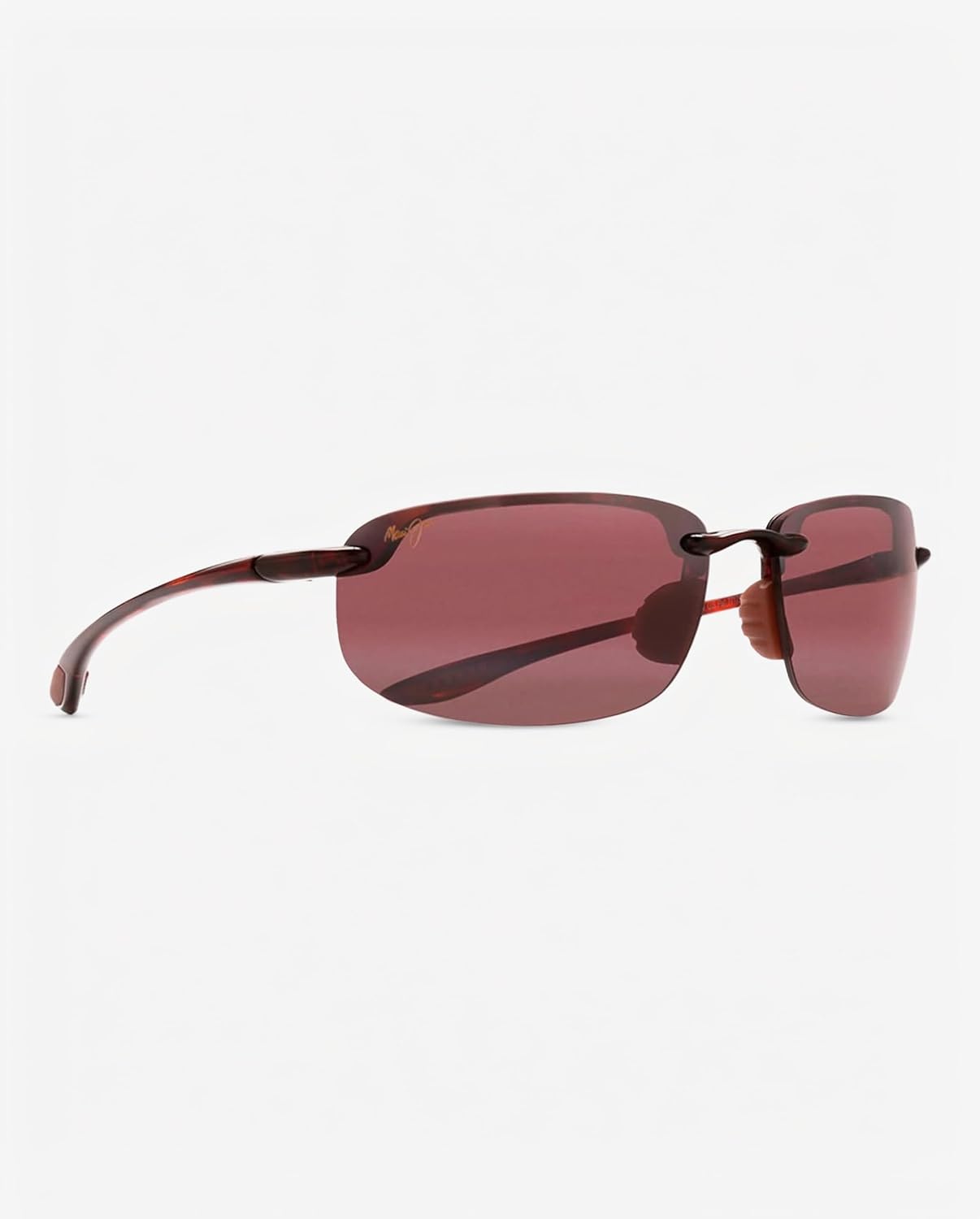
Contemporary eyewear engineering addresses this via specialized designs, such as the streamlined profile found in the Retro Small Frame Rectangle Outdoor Sports Sunglasses. This specific geometry marries classic retro aesthetics with a snug, contoured fit that hugs facial contours closely. Compact rectangular frames minimize peripheral light leakage while maintaining a lightweight footprint suited for active outdoor lifestyles, driving commutes, and beachside leisure.
Key structural considerations for optimal facial coverage include:
Contoured Wrap: Frames that curve slightly toward the temples prevent oblique solar entry.
Bridge Stability: Secure nose grips ensure the optical center remains aligned with the visual axis during physical motion.
Material Resilience: Flexible, impact-resistant polymers withstand high-stress outdoor environments without fracturing under mechanical strain.
Practical Testing Methods for Consumers
Consumers can perform straightforward verification checks to assess optical integrity before relying on eyewear in high-intensity environments:
The Grid Test: Hold the eyewear at arm's length, cover one eye, and view a straight-edged geometric pattern (such as floor tiles). Slowly pan the lenses across the grid. If the lines warp, bend, or wiggle, optical distortion is present, indicating substandard manufacturing.
Polarization Verification: Rotate the eyewear ninety degrees while viewing a digital liquid crystal display (LCD) or another polarized lens. If the light transmission shifts from transparent to opaque, the polarization filter is authentic.
Professional Metering: If authenticity tags appear ambiguous or old eyewear requires re-validation, local optical dispensaries can utilize a UV light meter to measure exact blocking performance.
Sources
American Academy of Ophthalmology – The Sun, UV Light and Your Eyes
American Academy of Ophthalmology – How to Choose the Best Sunglasses to Avoid Sun Damage
The Vision Council Foundation – Over-The-Counter Sunglasses Guide
Optometrists.org – What Do Polarized Lenses Do?
LuckeLadybug
Noticias
Navigating Legal Fallouts: Understanding the High-Stakes Consequences Facing Diddy


