




Essential Guide to Choosing Ergonomic Backpacks for Business Commuting and Travel

Modern daily routines require carrying a portable office everywhere you go, from laptops and tablet devices to power banks, documents, and personal essentials. Whether navigating packed subway cars, walking urban blocks, or sprinting through airport terminals, the gear you select plays a fundamental role in both daily efficiency and physical well-being. Modern high-capacity designs have evolved far beyond basic school bags, morphing into engineered carry systems built specifically to meet the demands of hybrid work and frequent travel.
The Ergonomics of Daily Carry: Protecting Spinal Health
Carrying heavy tech gear and travel supplies daily can place severe mechanical stress on the spine, shoulders, and neck. When a heavy load sits too low or lacks adequate support, it forces the user to lean forward, placing unnatural pressure on the lumbar spine and causing upper body fatigue.
According to ergonomic guidance from health authorities, effective load management depends on three primary factors:
Weight Distribution: The bulk of the bag's weight should rest against the mid-back (the thoracic region) rather than sagging down toward the hips or lower back.
Dual-Strap Usage: Utilizing both padded shoulder straps spreads the external load evenly across the trapezius muscles and shoulders, preventing shoulder elevation and spinal curvature.
Load Limits: Health professionals recommend keeping total carried weight under 10% to 15% of an individual's body weight to minimize posture degradation during extended walking.
Institutions like the American Chiropractic Association emphasize that adjustable, contoured shoulder straps combined with a structured back panel are vital for mitigating repetitive strain injuries during long daily commutes.
An Anatomy of Business Commuting Large Capacity Travel Backpacks
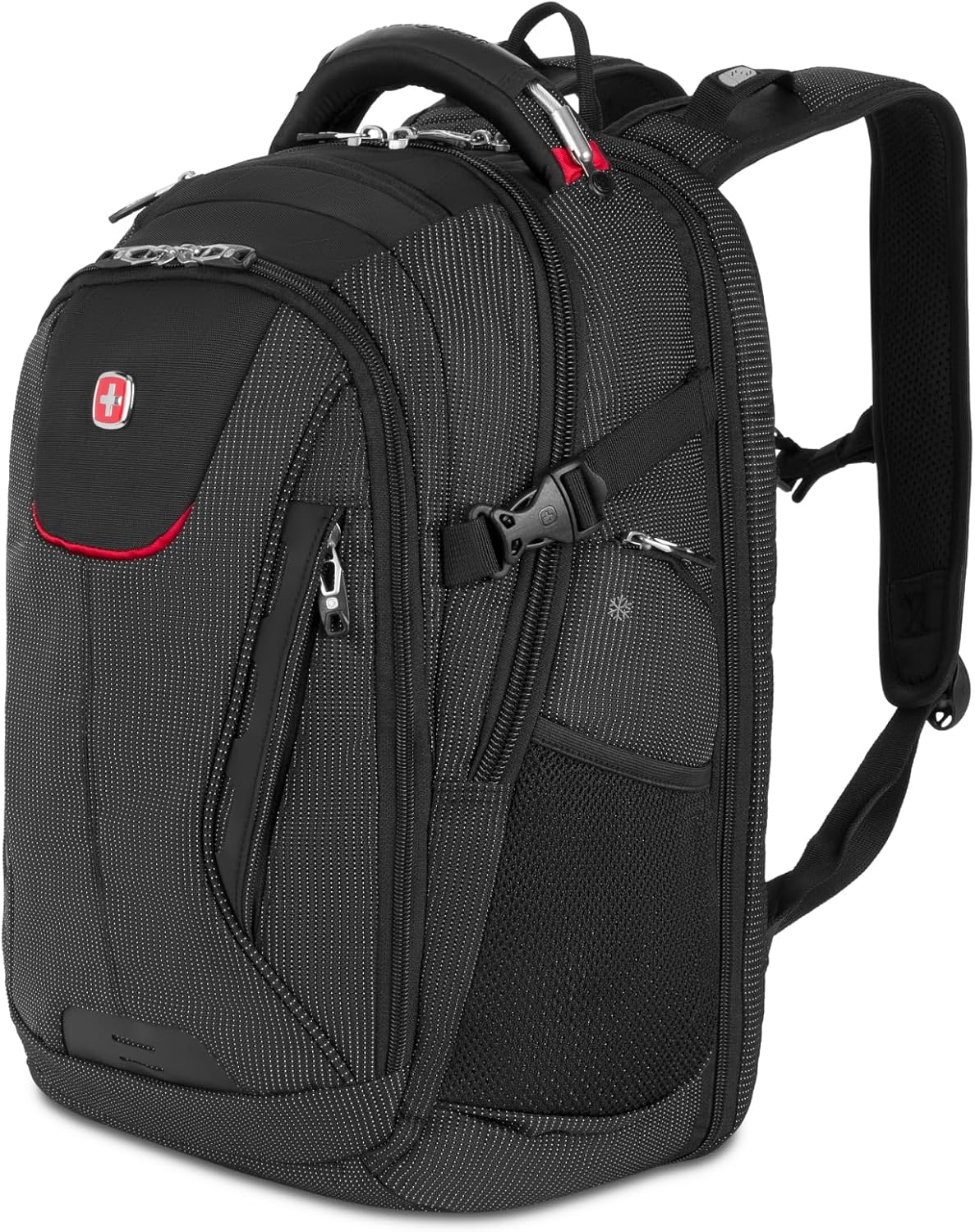
When selecting a multi-purpose pack for work and transit, balancing high internal capacity with a clean, professional appearance is paramount. A well-designed Business Commuting Large Capacity Travel Backpack bridges the gap between sleek executive luggage and heavy-duty outdoor gear.
Key structural elements to prioritize include:
Dedicated Suspended Tech Sleeves: A high-density padded compartment elevated off the bottom of the main chamber protects laptops and delicate devices from ground impacts during sudden drops.
Multi-Tiered Organization Sections: Deep main compartments accommodate change-of-clothes or travel pouches, while dedicated interior slots keep charging blocks, cables, pens, and passports organized and accessible.
Ergonomic Air-Mesh Backing: Channelled foam padding lined with breathable mesh encourages air circulation along the spine, reducing sweat buildup on humid morning commutes.
Clean, Solid-Color Aesthetics: Streamlined profiles rendered in neutral dark colors (such as matte black, charcoal, or deep navy) fit naturally into formal boardrooms while remaining durable enough for transit environments.
Real-World Case Study: The Hybrid Commuter Challenge
Consider the routine of a senior IT consultant traveling three days a week between client offices and regional branch locations. Carrying a 15-inch work laptop, additional monitor attachment, portable power station, cables, and an overnight garment change in traditional briefcases often results in severe single-shoulder strain and awkward transit maneuvering.
By switching to a modern large-capacity business carry setup, weight is distributed symmetrically across the upper torso. Dedicated quick-access compartments allow seamless passage through airport security checkpoints without unpacking the entire main chamber. The result is a notable reduction in physical fatigue at the end of a long travel day alongside significantly improved transit organization.
Key Selection Checklist for Everyday Professionals
Before committing to a high-capacity bag for daily work and travel, evaluate the following criteria:
Volume & Dimensions: Aim for a 25 to 35-liter capacity to accommodate both daily tech gear and weekend travel essentials without exceeding standard airline carry-on size limits.
Material Weatherproofing: Synthetic high-density fabrics like water-repellent polyester or ballistic nylon shield electronics during unexpected rain or spills.
Airport Trolley Straps: A rear luggage strap that slips over rolling suitcase handles simplifies navigation through large transit hubs.
For further insights on ergonomic posture and workplace physical wellness, consult resources provided by the Mayo Clinic.
Sources
American Chiropractic Association
Mayo Clinic
LuckeLadybug
Noticias
Navigating the History and Evolution of the October 12 Holiday


