



Cosplay for Kids: How to Choose a Princess Gown That Looks Magical and Feels Comfortable

A sparkling princess gown can turn an ordinary afternoon into an imaginative adventure, but a successful kids’ Cosplay outfit needs more than visual appeal. Fit, movement, visibility, comfortable accessories, and age-appropriate design can make the difference between a costume a child enjoys for hours and one they want to remove after a few minutes.
Start With Fit Before Sparkle
A sequin-covered gown naturally attracts attention, especially for birthdays, carnivals, Halloween events, and imaginative role play. Before focusing on decorative details, however, check how the costume fits while the child is actually moving.
The American Academy of Pediatrics recommends costumes and shoes that fit properly, with garments short enough to reduce tripping and snagging hazards. American Academy of Pediatrics
For a long princess-style gown, perform a simple movement test:
Have the child walk normally across the room.
Ask them to climb a few appropriate steps with supervision.
Have them sit, stand, turn around, and raise both arms.
Check whether the skirt reaches underneath their shoes.
Make sure puff sleeves, accessories, or decorative pieces do not restrict comfortable movement.
A gown can look beautifully dramatic without being excessively long. If a child repeatedly grabs the skirt just to walk normally, the length deserves another look.
Why Princess Gowns Work Well for Imaginative Play
Princess-style costumes give children an easy visual starting point while leaving plenty of room for their own stories. A gown with sequins, an O-neck silhouette, puff sleeves, and coordinated accessories can become formal royal clothing in one game and an adventurous fantasy costume in another.
That flexibility is useful because good dress-up play does not require an elaborate script. Children can invent the character, setting, personality, and adventure themselves.
For example, instead of assigning a specific fictional identity to a sparkling gown, a family might create an original “Moonlight Princess” who explores an enchanted winter garden. Another child might use the same gown to play a royal scientist, party host, storyteller, or carnival character.
The costume provides the visual framework; imagination supplies everything else.
Check Sequins and Decorative Details
Sequins can create the shimmering appearance people expect from a special-occasion princess gown, particularly under party or stage lighting. Decorative elements should still receive a quick inspection before the costume is worn.
Run your hands gently over areas where sequins or embellishments meet the neckline, sleeves, waist, and underarms. Look for rough edges, loose decorations, exposed threads, or anything that feels uncomfortable against the skin.
For younger children, inspect detachable accessories and decorative components particularly carefully. If something becomes loose, stop using the costume until the component can be addressed appropriately.
A lightweight layer underneath may improve comfort when decorative fabric feels scratchy, provided the additional layer does not make the outfit too warm or interfere with its fit.
Pay Attention to Puff Sleeves and Full Skirts
Puff sleeves contribute significantly to the classic princess silhouette, while a fuller skirt creates movement and visual drama. Both features also increase the amount of fabric surrounding the wearer.
The U.S. Consumer Product Safety Commission advises consumers to choose well-fitting costumes and warns about overly large or billowing costume elements around ignition sources. It also recommends checking costumes, wigs, and related items for appropriate flame-resistant labeling. U.S. Consumer Product Safety Commission
This becomes particularly relevant at events featuring candles, jack-o'-lanterns, fireplaces, or other heat and flame sources. Keeping children away from open flames remains important regardless of what their costume is made from.
Make Accessories Part of the Fit Check
Accessories can complete a princess look, but every additional item changes how a child moves. Crowns, capes, gloves, jewelry-style pieces, wands, and similar additions deserve the same attention as the gown itself.
Consider three questions for each accessory:
Does it stay securely in place?
Does it obstruct vision or normal movement?
Could its shape, length, or rigidity create a problem if the child falls?
The American Academy of Pediatrics advises against sharp or excessively long costume swords, canes, and sticks because they can cause injuries during a fall. It also recommends hats that do not slide over the eyes. American Academy of Pediatrics
For active parties, fewer accessories can actually produce a better costume experience. A child who can dance, play, sit, and explore comfortably is less likely to spend the event constantly adjusting the outfit.
Think Differently About Indoor and Outdoor Cosplay
A gown that works perfectly at an indoor birthday party may need adjustments before an evening Halloween walk. Outdoor use introduces darkness, uneven surfaces, weather, traffic, and longer periods of walking.
The National Safety Council recommends making children more visible after dark with measures such as reflective material, glow sticks, or flashlights. It also recommends avoiding masks that interfere with vision. National Safety Council
Reflective elements do not necessarily have to dominate a carefully planned princess look. Depending on the activity, visibility aids can be incorporated into an outer layer, treat bag, or other suitable element.
Footwear matters too. Decorative shoes may complement a costume for photographs, but properly fitting shoes appropriate for walking are a better priority when a child will be covering substantial distances.
A Practical Princess Gown Example
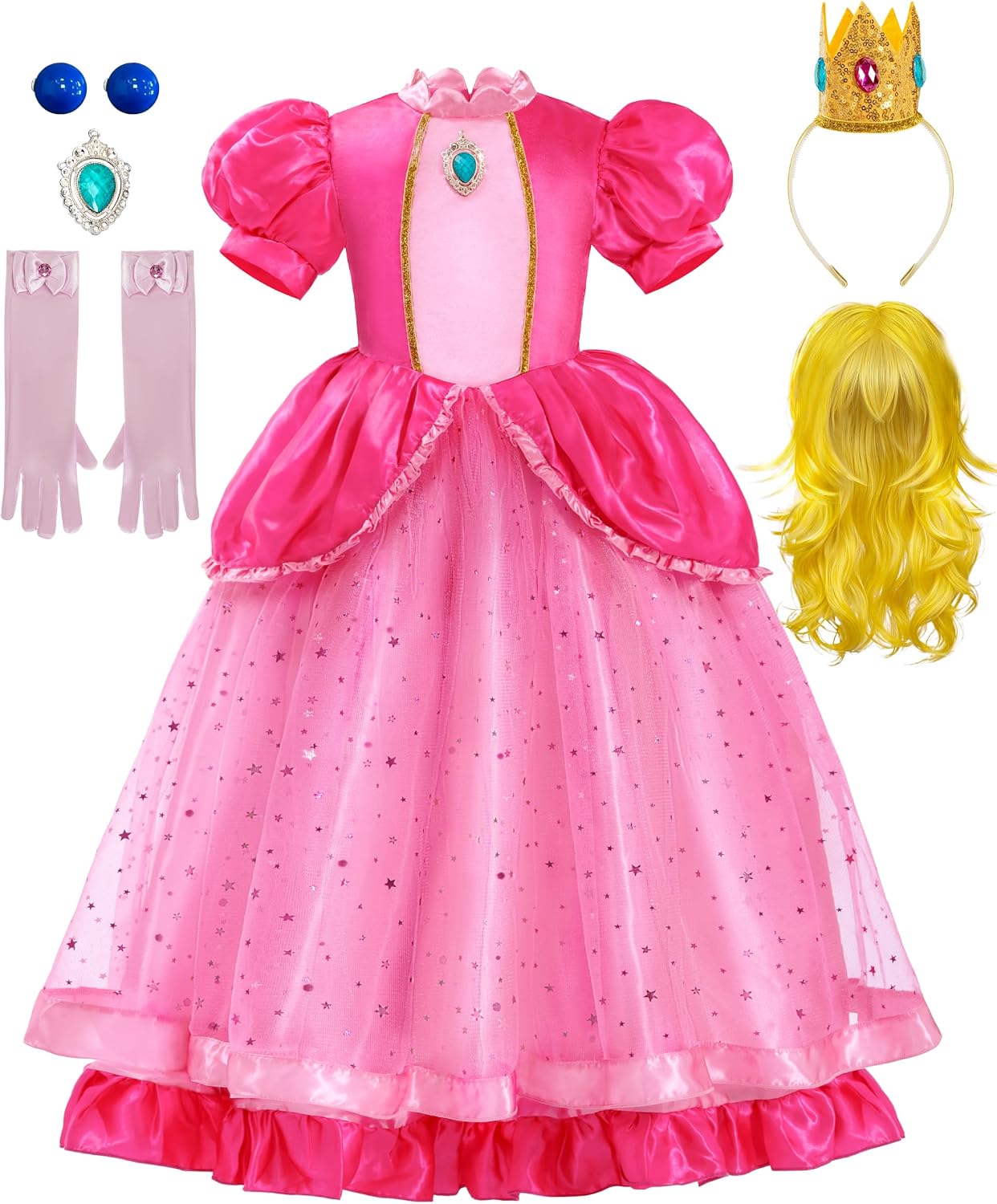
Consider a girls' sequin princess costume gown with an O-neck, puff sleeves, sparkling details, and included accessories. Its decorative design makes it naturally suited to dress-up occasions, but parents can improve the experience by evaluating it as clothing first and a costume second.
Before a birthday or carnival, the child could wear the complete outfit at home for 15 to 20 minutes while walking, sitting, and playing. That short rehearsal can reveal an irritating neckline, slipping accessory, restrictive sleeve, or overly long hem before the main event.
For an evening costume activity, the same family could repeat the movement check while also considering visibility, footwear, outdoor temperature, and the surrounding environment. This small amount of preparation preserves the magical appearance while addressing practical needs.
Let the Child Help Create the Character
One of the easiest ways to make Cosplay more engaging is to move beyond simply putting on an outfit. Ask the child to invent a character around the gown.
Simple prompts can get the story started:
What is your character's name?
Where does she live?
What special skill does she have?
What problem does she need to solve?
Who are her friends?
What would she carry on an adventure?
A shimmering gown might become the clothing of a princess who studies stars, protects animals, searches for hidden gardens, or organizes an imaginary royal celebration. The resulting character belongs to the child's imagination rather than depending entirely on an existing story.
Comfort Is Part of a Great Costume
A visually impressive costume loses much of its appeal when the wearer cannot move comfortably. This is especially important with children's gowns because long skirts, decorative surfaces, puff sleeves, and accessories can affect movement in ways that are not obvious from appearance alone.
Before the event, check the complete outfit rather than evaluating individual pieces separately. Have the child wear the gown with the actual shoes, underlayers, and accessories they plan to use.
The best princess Cosplay experience combines imagination with practical preparation: choose a suitable fit, inspect decorative details, keep vision and movement clear, adapt the outfit to the environment, and then let the child create a character worth remembering.
Sources
American Academy of Pediatrics
U.S. Consumer Product Safety Commission
National Safety Council
LuckeLadybug
Noticias
How to Plan a Seamless Trip to Your Final Destination Without Travel Friction


