

Discover the Best Hair Extension Types for Your Perfect Look

So, you're thinking about hair extensions? It's an exciting step! But with so many options out there, it can feel a little overwhelming. What's the real difference between tape-ins and clip-ins? And which ones won't damage your hair?
Let's break it all down. Finding the best hair extension type isn't about picking the most popular one; it's about finding the perfect match for your hair, your lifestyle, and the look you're dreaming of. Think of this as your personal guide to navigating the choices and finding what truly works for you.
Your Guide to Choosing the Right Hair Extensions
Before you even start looking at hair, the most important thing to consider is... well, your hair. Is it fine and delicate, or thick and strong? Your natural texture will be the biggest factor in determining which extensions will look natural and, more importantly, won't cause damage.
Next, think about your day-to-day life. Are you a get-up-and-go person, or do you love spending time styling your hair? Some extensions are a breeze to maintain, while others require a bit more commitment. Honesty here is key to a happy extension experience.
Setting Your Foundation for the Perfect Match
Think of this as your pre-consultation checklist. Getting clear on these points before you step into a salon or shop online will make the whole process smoother and ensure you walk away with hair you absolutely love.
Ask yourself these questions:
- How much commitment are you ready for? Are you looking for a quick change for a weekend, or a semi-permanent solution that lasts for months?
- What's your hair's story? If your hair is fine, you'll need something lightweight. If it's strong and dense, it can handle a more substantial method.
- What's your budget? Remember to account for the initial cost of the hair and installation, plus any follow-up maintenance appointments.
- How do you wear your hair? If you live in high ponytails, you'll need an application method that stays hidden. If you mostly wear it down, you have more flexibility.
Answering these questions first gives you a clear roadmap. It helps you zero in on the options that will truly enhance your look without complicating your life.
Quick Comparison of Popular Hair Extension Types
To give you a bird's-eye view, I've put together a simple chart comparing some of the most common methods. This is a great starting point to see how they stack up against each other at a glance.
| Extension Type | Application Method | Wear Time | Best For |
|---|---|---|---|
| Clip-In | Small clips that snap onto the base of your hair. | 1 day (remove before sleeping). | Temporary length/volume, special occasions, low-commitment users. |
| Tape-In | Wefts are attached using double-sided tape. | 4-8 weeks. | Fine to medium hair, quick professional application. |
| Sew-In/Weave | Hair is braided into cornrows; wefts are sewn onto the braids. | 6-8 weeks. | Thick, coarse, or textured hair; very secure and long-lasting. |
| Fusion/Keratin | Individual strands are bonded to your hair with keratin adhesive. | 3-5 months. | Medium to thick hair, seamless blending, versatile styling. |
This table is just a quick snapshot. As we dive deeper into each type, you'll get a much better feel for the nuances, maintenance needs, and specific pros and cons that will help you make your final decision.
Exploring the Main Types of Hair Extensions
Stepping into the world of hair extensions is like unlocking a whole new level of style. With so many different ways to get longer, fuller hair, it can feel a little overwhelming at first. But don't worry—I'm here to walk you through it. Think of me as your personal guide to the most popular extension types. We’ll break down what they are, how they feel, how they’re applied, and who they’re really for.
This visual guide is a great starting point, showing just how easy it can be to experiment with temporary extensions, like clip-ins, right in your own home.
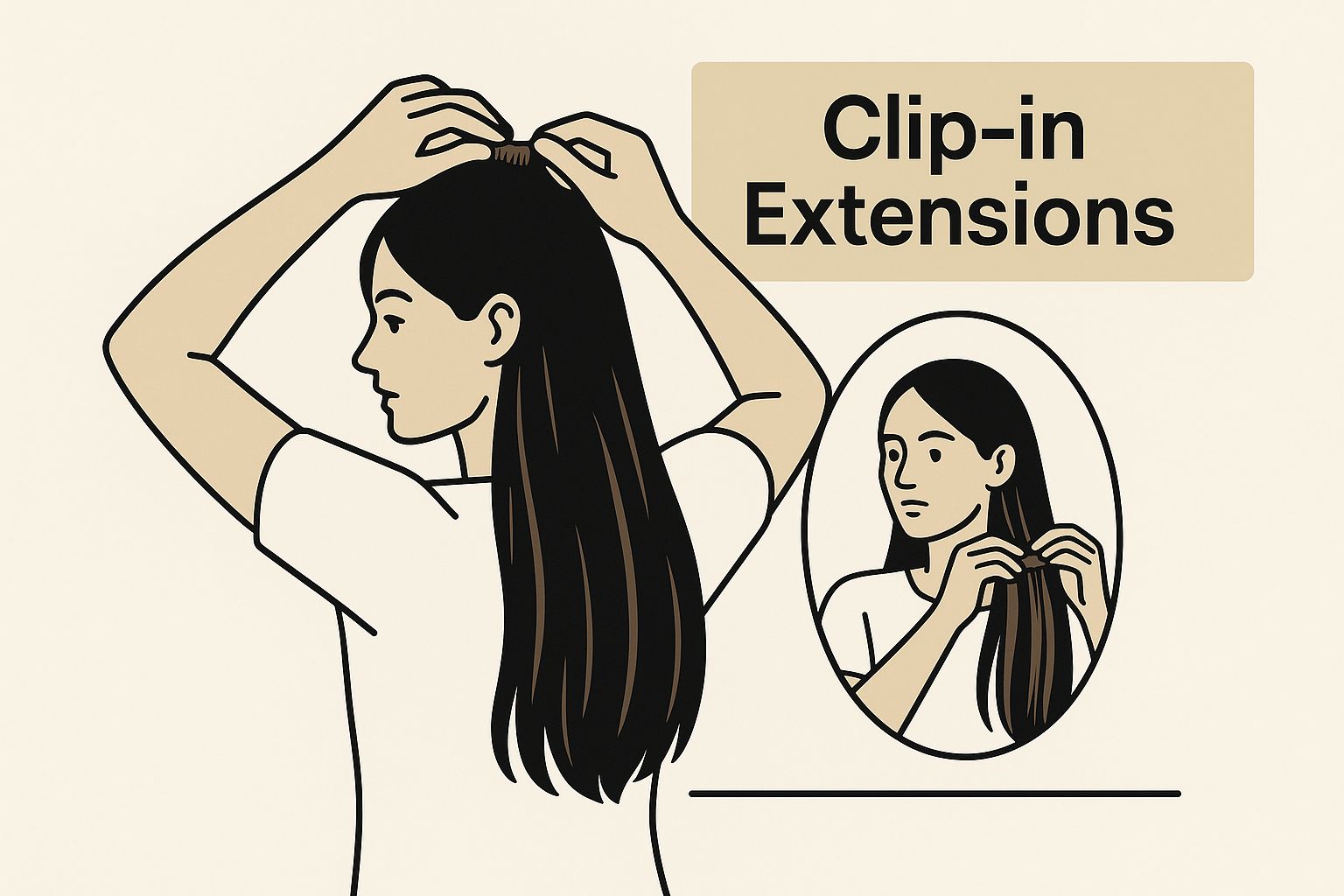
As you can see, the beauty of clip-ins lies in their simplicity. They are hands-down the most accessible way to dip your toes into the extension world.
Clip-In Extensions: The Ultimate On-Demand Hair
Clip-ins are the true chameleons of the hair world. They are basically wefts of hair with small, pressure-sensitive clips already attached. You just part your hair, snap the clips onto your roots, and blend everything together. It's a completely temporary system that you can put in and take out all by yourself in a matter of minutes.
I like to think of them as a killer hair accessory, just like a statement necklace or your favorite pair of earrings. You pop them in when you want that extra "wow" factor for a special event or a night out, and then you take them off before bed. Simple as that.
- Application Process: A super easy DIY process that takes just 5-15 minutes. You don't need a stylist at all.
- Feel and Appearance: When you place them right, they blend in beautifully and feel comfortable. If you're not careful, though, they can feel a bit bulky.
- Typical Lifespan: The hair itself can last for a year or even longer with good care, but you absolutely have to remove them every day. Sleeping in your clip-ins is a recipe for tangles and can lead to breakage.
Tape-In Extensions: The Seamless Semi-Permanent Solution
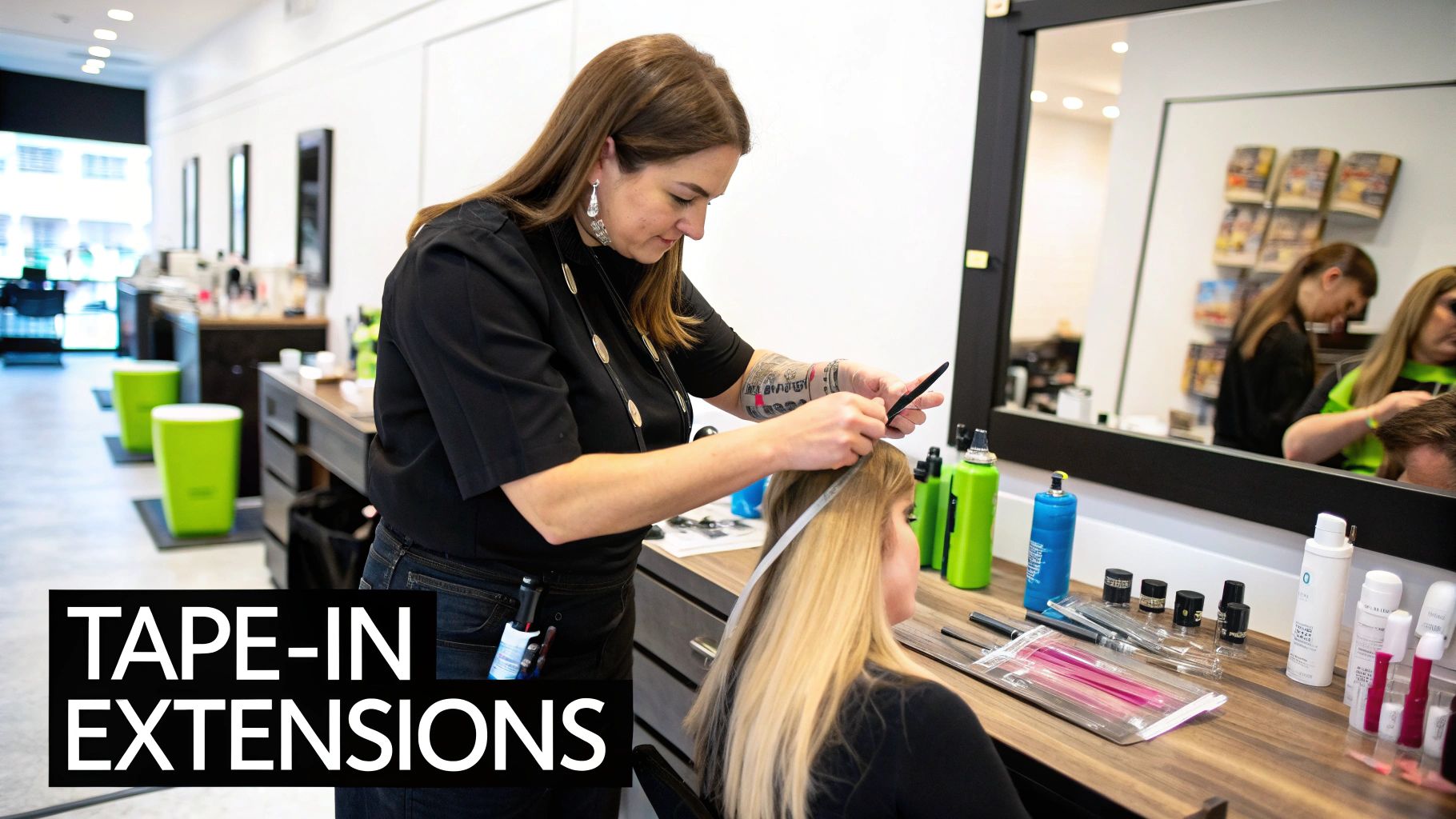
Tape-in extensions are made of thin, one-inch-wide wefts with a special adhesive tab at the top. Your stylist will "sandwich" a small slice of your own hair between two of these wefts. The application is surprisingly quick, doesn't involve any heat, and gives you a flat, nearly invisible finish.
Think of tape-ins like a semi-permanent wallpaper for your hair—professionally installed for a smooth, cohesive look that becomes part of your everyday style for weeks on end. This method is a go-to for people with fine to medium hair because the wefts do a fantastic job of distributing the weight evenly.
Because the wefts are so flat and wide, tape-ins are one of the best hair extension types for creating a natural look without the bulkiness associated with other methods. They lay flush against the scalp, making them very discreet.
A professional stylist can typically get a full head done in about 40 minutes to an hour. They'll last about 4-8 weeks before you need to go back to have them moved up. Your stylist will use a special solvent to gently loosen the adhesive, apply new tape, and put them right back in.
Sew-In Extensions or Weaves: The Durable Foundation
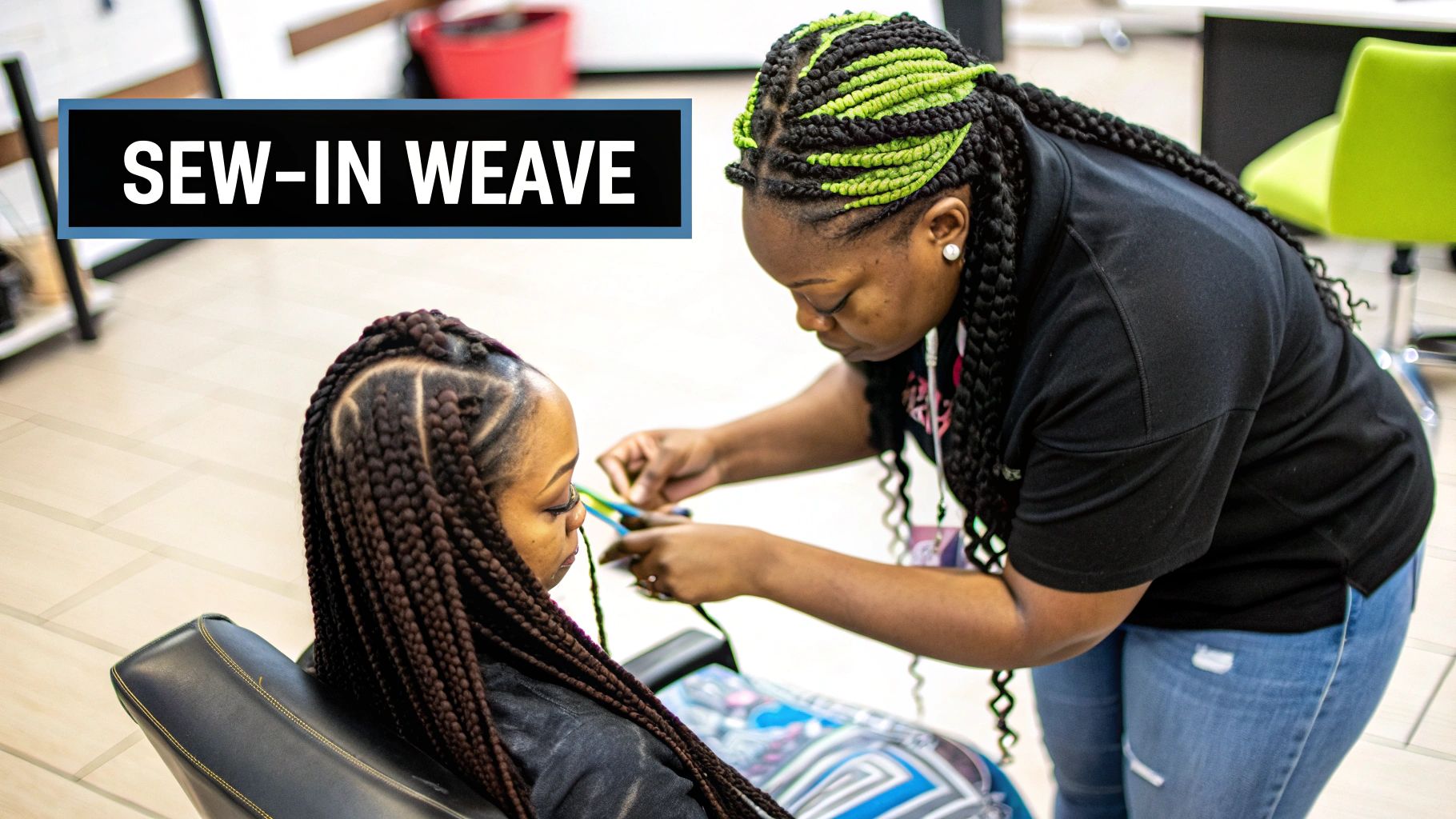
A sew-in, which you might also hear called a weave, is a classic method known for being incredibly durable. It all starts with your stylist braiding your natural hair into tight, flat cornrows that create a base. From there, wefts of extension hair are carefully sewn directly onto these braids with a needle and thread.
This technique is super secure, making it a fantastic choice for anyone with thick, coarse, or highly textured hair that can comfortably handle the braids. It’s like building a strong foundation before putting up a house—the braids provide all the support needed to hold the extensions securely for a long time.
- Application Process: This is strictly a professional job. It can take anywhere from 1-3 hours, depending on the braid pattern and how much hair you're adding.
- Feel and Appearance: It might feel a bit tight on your scalp for the first day or two, but that feeling quickly goes away. The end result is a full, voluminous look that blends perfectly.
- Typical Lifespan: You'll want to have your sew-in removed or reinstalled every 6-8 weeks. This prevents any matting and keeps your natural hair underneath healthy and happy.
Fusion or Keratin Bond Extensions: The Strand-By-Strand Commitment
Fusion extensions—also called K-tips or keratin bonds—are one of the most customized and long-lasting options out there. With this technique, individual extension strands are attached to tiny sections of your own hair using a keratin-based adhesive. A special heating tool melts the keratin tip, letting the stylist roll and form it around your hair to create a tiny, durable bond.
This strand-by-strand application gives you amazing 360-degree movement. That means you can pull your hair up into a high ponytail or a fancy updo without anyone ever seeing the bonds. It's a real commitment to long-term length and volume. For a closer look at crafting gorgeous styles, check out our guide on hair extension styles for trendy looks.
Because the application is so detailed, it's also one of the longest and priciest. A full head can take a stylist 3-6 hours to install. But with the right care, these extensions can last 3-5 months. Removal is another job for a professional, who will use a specific solution to safely break down the keratin bonds without damaging your hair.
Human Hair Versus Synthetic Hair Extensions
One of the first, and biggest, decisions you'll face when choosing extensions is the hair itself. It really boils down to two choices: human hair or synthetic hair. This single decision impacts everything—your styling routine, your budget, and how natural the final look will be.
Think of it like choosing between a silk blouse and a polyester one. Both can look fabulous, but they feel, wear, and care for completely differently. The same principle applies here.
Human hair extensions are, without a doubt, the top-tier choice. They deliver a look and feel that's practically identical to your own hair. Because it's real, it moves naturally, catches the light just right, and blends in a way that synthetic fibers just can't quite match. That authenticity is really its superpower.
The biggest perk? Styling freedom. You can treat human hair extensions exactly like you would your own hair. Go ahead and straighten them, curl them, or even have a professional color them for a perfect match. This makes them a fantastic option for anyone who loves to switch up their style or needs a flawless, long-term solution.
The Real Deal with Human Hair
While human hair gives you that incredible quality, there are a few things to keep in mind. Being the premium option, it naturally comes with a higher price tag. The quality can also vary a lot. You'll often hear the term "Remy" hair—that's the gold standard where all the hair cuticles are kept aligned in the same direction, which is key to preventing tangles and matting.
- Longevity: With proper care, good quality human hair extensions can last over a year, making them a solid long-term investment.
- Styling: You can use heat tools and have them professionally colored.
- Feel: They're soft, move like your own hair, and blend seamlessly.
- Cost: The initial investment is significantly higher than for synthetic hair.
When you invest in high-quality human hair, what you're really paying for is realism and durability. The confidence that comes from being able to treat it just like your own hair is a game-changer for daily wear.
This is the way to go if you see yourself wearing extensions for months on end and want the most natural, flexible look you can get.
The Smart Side of Synthetic Hair
Now, let's talk about synthetic hair. Don't write it off just yet! High-quality synthetic hair has improved dramatically over the years and brings its own set of advantages to the table. The most obvious one is the price—it's much more affordable, making it a great way to dip your toes into the world of extensions.
What’s really cool about synthetic hair is its "style memory." These fibers are engineered to hold a specific style, whether that's perfectly straight or bouncy curls, through almost anything. That means a lot less fuss and styling time for you each morning.
If you’re just looking for a temporary pop of glamour, like a chic, sleek ponytail for a special event, synthetic is a brilliant choice. For anyone new to this, our ponytail extensions for beginners guide has some great tips for nailing that look.
Of course, synthetic hair has its limits. Most types can't handle heat styling, as hot tools will melt the fibers. You also can’t color them. They don't last as long, either—you're typically looking at a lifespan of just a few months with regular wear. This makes them one of the best hair extension types for short-term fun or for anyone who wants a low-maintenance, grab-and-go style without the big upfront cost.
Matching Extensions to Your Hair and Lifestyle
Finding the "best" hair extension type isn't about what's trendy or most expensive. It’s a lot like shopping for the perfect pair of jeans—the right fit is completely personal. The secret to happy, healthy extensions is finding the sweet spot between what your natural hair can handle and what your daily life realistically allows.
Think of your hair's natural texture as the foundation. A method that works beautifully for thick, strong hair might be way too much for fine strands. At the same time, your lifestyle determines how much upkeep you can truly commit to. Let's walk through how to find your perfect match so your new hair feels like an upgrade, not a chore.
Finding the Right Fit for Your Hair Texture
Every head of hair is different, and respecting your hair's unique density and strength is non-negotiable. This is the single most important factor in preventing damage and getting that seamless, "is it or isn't it real?" blend.
-
For Fine or Thin Hair: The name of the game is lightweight and low tension. Anything too heavy will pull on your delicate roots, causing stress and potential breakage. Tape-ins are a fantastic choice because their wide wefts spread the weight out evenly across a larger section of hair. Another great option is nano rings; their attachment points are so tiny and discreet they're one of the best hair extension types for less dense hair.
-
For Medium or "Normal" Hair: You've hit the jackpot! Your hair is generally strong enough to handle almost any method out there. You can rock tape-ins, micro-links, keratin bonds, or even a lighter sew-in. For you, the decision will probably hinge more on your budget and lifestyle than any major hair limitations.
-
For Thick or Coarse Hair: Your hair's natural strength is your biggest asset. It can comfortably support more substantial methods, especially a traditional sew-in (or weave). The braided foundation creates an incredibly secure base that can hold heavier and longer wefts without a problem. Keratin fusion bonds are also an excellent fit, as your hair's thickness will easily hide the individual attachments.
Aligning Extensions with Your Daily Routine
Okay, so you’ve matched a method to your hair type. Now it's time for a reality check about your lifestyle. Even the most gorgeous extensions will turn into a headache if they clash with your daily schedule.
Take a second and think about your typical week. Are you always rushing out the door? Do you spend hours at the gym? Or do you love spending time getting ready?
A perfect match means your extensions feel like a natural part of you, not a demanding chore. The goal is to enhance your routine, not add stress to it.
Let's break down a few common scenarios and see which extensions fit best.
The Busy Professional or Parent
If your mornings feel more like a sprint than a stroll, you need something that’s ready to go when you are.
- Best Bet: Tape-ins or sew-ins. These are professionally installed, semi-permanent solutions that require very little day-to-day work from you. You wake up with consistent length and volume, ready for a quick style. They save you precious time and look polished with minimal fuss.
- Avoid: Clip-ins. While they seem easy, the daily task of putting them in and taking them out can quickly feel like one more thing on an already packed to-do list.
The Fitness Enthusiast
If you’re a regular at the gym, on the running trail, or in the pool, you need extensions that won’t slip or get uncomfortable when you sweat. They have to hold up to frequent washing, too.
- Best Bet: Sew-ins or keratin bonds. A sew-in is incredibly secure, keeping your natural hair protected and neatly contained. Keratin bonds are also exceptionally durable and give you easy access to your scalp, which makes thorough washing much simpler.
- Consider: Tape-ins can work, but you have to be very careful. You must dry the adhesive bonds completely right after every wash, as constant moisture can cause the tape to lose its stickiness over time.
The Style Chameleon
Do you live to change up your look? If you want to go from a chic bob on Tuesday to long, flowing waves on Friday, you can’t be tied down.
- Best Bet: Clip-in extensions. They are the definition of zero commitment. You can pop them in for a glamorous event and have them out five minutes after you get home. This gives you total freedom to play with your style without being locked into one look for weeks on end.
- Avoid: Fusion bonds. Their staying power is a huge plus for some, but it’s a major drawback if you get bored easily and crave constant change.
How to Care for Your Hair Extensions
So, you’ve got your dream extensions, and they look fabulous. Now comes the important part: keeping them that way. The secret to long-lasting, gorgeous extensions isn't just about the initial install—it's all in the daily care. Think of it like caring for a silk blouse; you wouldn't just toss it in the wash with your jeans. Your extensions need that same kind of gentle, mindful attention.
Nailing your maintenance routine is about more than just looks; it's about protecting your investment and, most importantly, the health of your natural hair underneath. Get this right, and you'll keep your extensions looking salon-fresh for weeks or even months to come.
Washing and Brushing Your Extensions
First things first, your old hair-washing habits need a slight tweak. Gentleness is the name of the game. Always, always reach for sulfate-free shampoos and conditioners. Sulfates are harsh detergents that can strip the life out of your extensions, drying them out and weakening the bonds, tapes, or beads over time.
When you're in the shower, resist the urge to scrub vigorously at your scalp. Instead, let your fingertips gently massage the shampoo into your roots and allow the lather to rinse down the lengths. When it's time for conditioner, apply it only from the mid-lengths to the ends, steering clear of the attachment points to avoid causing any slippage.
Brushing is just as critical as washing. Your standard paddle brush is now your hair's worst enemy—it can easily snag on attachments, leading to painful pulling and damage. You absolutely need to switch to a dedicated extension brush with soft, looped bristles designed to glide right over the bonds or wefts without a catch.
Here’s a simple brushing technique to master:
- Start from the bottom: Always begin detangling at the ends and slowly work your way up to the roots. Hold the hair at the base as you brush to prevent any tension on your scalp.
- Make it a habit: Brush your hair thoroughly at least twice a day—once in the morning and again right before bed. This is your best defense against tangles.
- Brush before you wash: Never hop in the shower with tangled hair. Detangle everything while it's dry, because hair is at its most fragile when wet.
Styling and Sleeping with Extensions
One of the best parts of having extensions is all the styling fun, but heat can be a real troublemaker. If you have human hair extensions, you can still use your favorite curling wands and straighteners. Just make it a non-negotiable rule to apply a good heat protectant spray every single time. Whenever you can, dial down the temperature on your tools; your extensions will thank you for it. For products specifically made to keep extensions in top shape, you might want to look into something like the Rpr Extension Envy Shampoo.
Your nighttime routine is another game-changer. Going to bed with wet or even slightly damp hair is a huge no-no. This can lead to serious matting at the roots, which is a nightmare to fix.
To keep your hair safe while you sleep, loosely braid it or sweep it into a low ponytail. This simple step stops it from tangling and creating friction against your pillow. Want to take it a step further? Wrapping your hair is a fantastic way to protect it. We dive deep into this in our guide to the best hair bonnets for healthy hair. A little nighttime care goes a long way in preventing morning tangles.
Finally, a crucial reminder: move-ups and removals for methods like tape-ins, fusions, or sew-ins are not a DIY project. Always go back to a certified stylist. They have the professional tools and proper solvents to take out your extensions safely, leaving your natural hair healthy and ready for your next set.
Comparing the Pros and Cons of Each Method
Alright, now that you know how each type of extension is applied, let's get into the real talk: the good, the bad, and what it all means for your hair. Think of choosing extensions like picking a car. One person might love the long-term reliability of a sedan, while another prefers the zippy, short-term fun of a convertible. It’s all about what fits your lifestyle and priorities.
We're going to break down the real-world trade-offs for each method. Forget the marketing fluff. We’ll look at crucial factors like potential hair damage, how much you'll spend upfront, what the upkeep really involves, and how much styling freedom you'll have. This way, you can make a smart investment you'll be happy with.
The Lowdown on Clip-In Extensions
If you're looking for flexibility and the safest option out there, clip-ins are your new best friend. Because you put them in and take them out yourself each day, there’s practically zero risk of damage to your natural hair, as long as you're gentle. They're also the most affordable way to dip your toes into the world of extensions.
But here’s the flip side: their greatest strength is also their main weakness. Being temporary means you can't just go to sleep with them in, and the daily ritual of clipping them in can feel like a chore after a while. If you have very fine hair or love a high ponytail, they can sometimes feel a bit bulky or be tricky to hide.
The Tape-In Trade-Off
Tape-ins are a crowd favorite for a reason. They lay incredibly flat against the head, creating a seamless look that blends beautifully, especially with fine to medium hair. The application is also one of the quickest professional methods—you can be in and out of the salon in about an hour—making them a fantastic semi-permanent choice.
The catch? Maintenance is key. The adhesive tapes can be sensitive to oils and even sweat, so you'll need to be mindful of your hair products and post-gym routine. You'll also be visiting your stylist for removal and reapplication every 4-8 weeks, and those costs can add up. Plus, if they aren't removed by a pro who knows what they're doing, you risk sticky residue or even breakage.
It really boils down to convenience versus cost. Tape-ins give you that amazing "I woke up like this" hair, but you have to be ready for the recurring salon appointments and budget needed to keep them looking perfect and your own hair healthy.
Weighing Sew-Ins and Weaves
When it comes to security and durability, nothing beats a classic sew-in. This is one of the absolute best hair extension types for anyone with thick, coarse, or textured hair because the braided foundation can easily handle a lot of length and volume. It’s also a great protective style, keeping your natural hair tucked away and safe from daily styling stress.
On the other hand, that secure foundation can feel pretty tight and even a bit uncomfortable for the first few days. If the braids are done too tightly, they can put stress on your scalp and potentially lead to traction alopecia over time. This method also makes it harder to get to your scalp for a deep clean, which isn't ideal if you're prone to buildup or other scalp issues.
Fusion and Micro-Link Considerations
For the most natural movement and styling freedom, fusion (K-Tip) and micro-link (I-Tip) extensions are in a league of their own. Since they're attached strand by individual strand, they move and swing just like your real hair. This means you can rock high ponytails, intricate updos, and any style you can dream of without a hint of an attachment showing.
But this level of detail comes with a hefty price tag and a time commitment. The application is the longest, often taking 3-6 hours, and it’s the most expensive option upfront. While perfectly safe in the hands of an expert, a sloppy application or removal of heat-based fusion bonds or pressure-based micro-links carries a higher risk of causing targeted damage to your natural hair strands.
Hair Extension Pros and Cons Scorecard
To make this all a bit easier to digest, here's a simple scorecard. It gives you a quick, at-a-glance comparison of how each extension type performs across the most important decision-making factors.
| Extension Type | Damage Potential | Initial Cost | Maintenance Level | Styling Flexibility |
|---|---|---|---|---|
| Clip-In | Very Low | Low | Low (but daily effort) | Moderate |
| Tape-In | Low-Medium | Medium | Medium-High | High |
| Sew-In/Weave | Low-Medium | Medium | Medium | Moderate-High |
| Fusion/Keratin | Medium-High | High | Low (but long-term) | Very High |
| Micro-Link | Medium | High | High | Very High |
At the end of the day, there’s no single "best" extension for everyone. The perfect choice for you is the one that fits your hair type, budget, lifestyle, and how much time you're truly willing to invest in upkeep. Use this guide to find the method that will make you feel your most confident and beautiful self.
Answering Your Hair Extension Questions
Deciding to get hair extensions is exciting, but it's completely normal to have some last-minute questions pop up. Feeling confident in your choice means getting those final uncertainties cleared up. Let's walk through some of the most common things people ask right before they take the leap.
Think of this as the practical know-how you need to match your hair goals with the perfect extension type.
Will Hair Extensions Damage My Natural Hair?
Let’s get this one out of the way first: no, extensions themselves aren’t inherently damaging. The real culprits are almost always improper application, neglecting maintenance, or picking a method that’s a bad match for your natural hair.
For instance, methods like clip-ins are virtually damage-free because you take them out every day. They don't put any long-term stress on your hair follicles. On the other hand, professional methods like tape-ins or fusions are also perfectly safe, but only when a trained, certified stylist applies and removes them. Damage happens when people try to take permanent extensions out themselves, when a stylist puts them in too tightly, or when you skip your maintenance appointments.
How Much Do Hair Extensions Usually Cost?
This is probably the biggest question, and the answer is... it varies. A lot. The final price tag depends on the method you choose, the quality of the hair (human vs. synthetic), the length you want, and your stylist's installation fees.
- Temporary Options: You can find a quality set of clip-in extensions for anywhere from $100 to over $500.
- Professional Methods: For semi-permanent types like tape-ins or sew-ins, you're looking at a range of $300 to well over $2,000 for the hair itself plus the initial installation.
Don't forget to budget for the follow-up! Maintenance appointments are non-negotiable for keeping both your extensions and your natural hair looking great and staying healthy.
A common myth is that extensions are a one-time purchase. For semi-permanent types, think of it as an ongoing beauty service, much like getting your color touched up. Factoring in maintenance creates a realistic budget.
Can I Color or Heat Style My Extensions?
This all comes down to the type of hair you buy. If you invest in 100% Remy human hair, then yes! You can generally color, tone, and use heat tools on them just like you would your own hair. My best advice? Always have a professional do the coloring to guarantee a seamless match and avoid any costly mistakes.
Synthetic hair is a completely different ballgame. Unless the package specifically says "heat-friendly," any hot tool will literally melt the fibers. And you can forget about hair dye—it won't stick to synthetic fibers and will just ruin the extensions.
Ready to explore a world of style possibilities? From stunning hair extensions to the latest fashion, LuckeLadybug LLC has everything you need to express your unique look. Discover our curated collections today.
Article created using Outrank
LuckeLadybug
News
Navigating Cable News Geopolitics: How to Evaluate Fox News Iran Reporting Critically


