
Products we think you may like.


Womens Lingerie Styling Guide: How Pearl Jewelry Creates a Polished, Balanced Look

Womens Lingerie can be more than a foundation layer: when thoughtfully styled with jewelry, robes, slips, or evening separates, it can become part of a cohesive personal look. Imitation pearl jewelry is especially useful because its soft luster can add visual refinement without requiring an elaborate outfit.
Why Pearl Jewelry Works With Lingerie-Inspired Styling
Pearls create a distinctive combination of softness and structure. Their rounded shapes and reflective surfaces can complement lace, satin-like fabrics, sheer layers, corset-inspired silhouettes, and other textures commonly associated with lingerie-influenced dressing.
The key is balance. If the clothing already contains intricate lace, embroidery, bows, or decorative hardware, restrained jewelry usually keeps the overall appearance from becoming visually crowded.
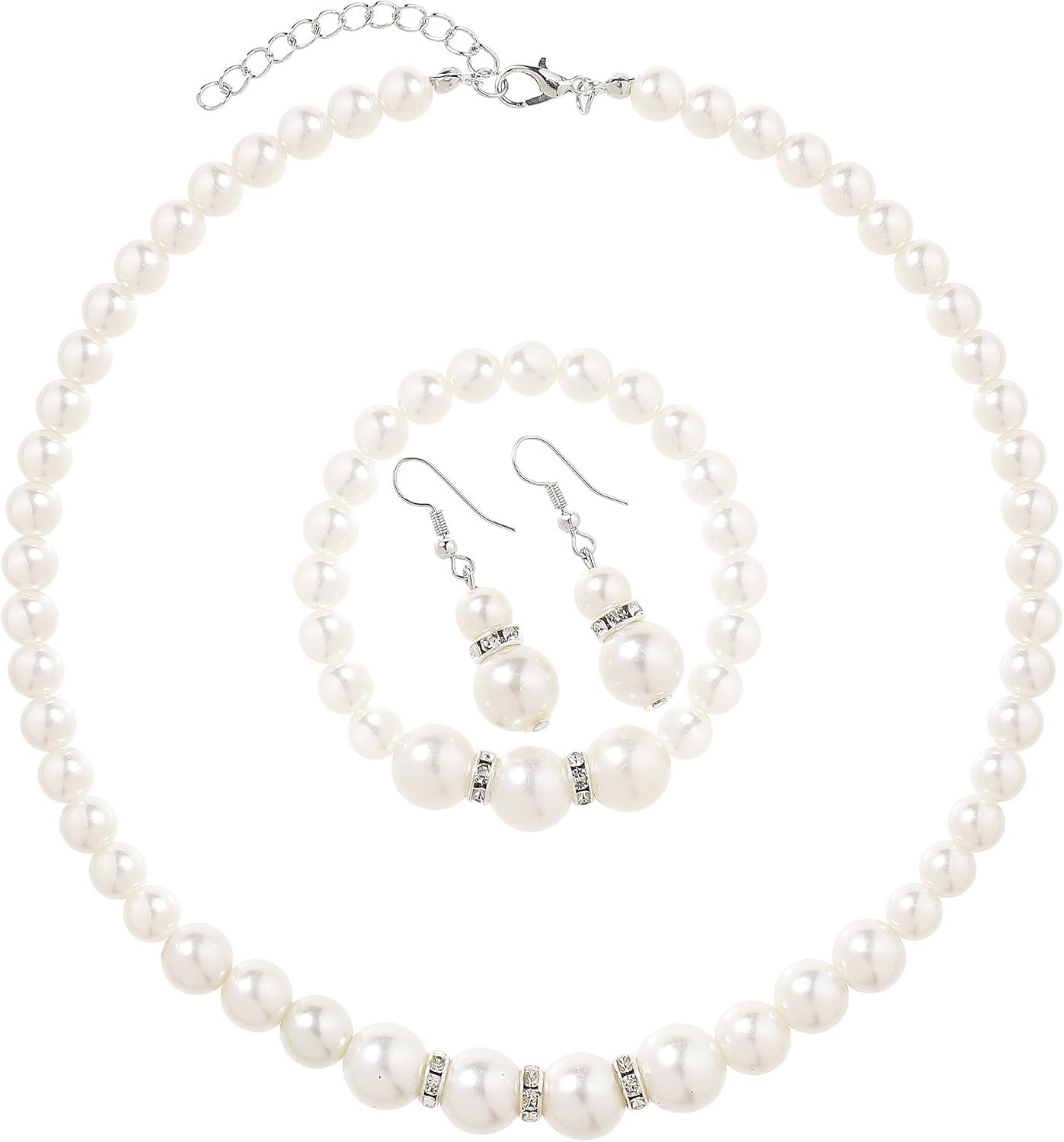
A vintage-style five-piece imitation pearl jewelry set containing necklace, bracelet, earrings, and ring pieces illustrates this principle well. Rather than treating every piece as something that must be worn simultaneously, think of the set as a coordinated styling toolkit.
Start With the Neckline
Neckline shape is one of the most useful guides for choosing jewelry. The Gemological Institute of America notes that pearls are available in numerous shapes, sizes, and colors, which helps explain why pearl jewelry can produce very different visual effects depending on its proportions and design. GIA
With lingerie-inspired outfits, consider these practical combinations:
Strapless or corset-style necklines: A pearl necklace can occupy the open space between the neckline and face and become the primary accessory.
Deep V-necklines: Choose jewelry whose scale does not compete with the strong vertical line of the garment.
High necklines: Earrings and a bracelet may provide enough detail without adding a necklace.
Lace-trimmed necklines: Simpler pearl pieces can preserve the lace as the main decorative feature.
Robes and open-front layers: A necklace can create a focal point inside the frame formed by the garment.
Before adding another accessory, look at where the eye naturally goes. If the neckline is already the focal point, jewelry should usually support rather than fight it.
Use a Five-Piece Set Selectively
A coordinated set makes matching easier, but matching does not mean wearing everything at once. A necklace, bracelet, earrings, and ring can be divided into different combinations depending on the occasion and complexity of the clothing.
For example, consider three approaches:
Minimal: Earrings plus a ring for an understated finish.
Balanced: Necklace plus earrings when the neckline needs definition.
Statement: Necklace, earrings, bracelet, and ring pieces when the clothing itself is relatively simple.
Imagine a plain satin-like slip with minimal trim. Several coordinated pearl pieces can introduce enough texture to make the outfit feel intentional, whereas an ornate embroidered corset may need only earrings and a ring.
That simple editing process is often what separates a coordinated look from an overloaded one.
Match Visual Weight, Not Just Color
Successful accessorizing is not simply about matching white pearls with light-colored fabric. Consider the visual weight of every element.
Large or densely arranged imitation pearls naturally command more attention. Delicate pieces have less visual weight and therefore tend to integrate more quietly with detailed garments.
A useful rule is to create one dominant area. If the necklace is elaborate, allow it to lead; if dramatic earrings frame the face, reduce competing detail around the neck.
This principle is particularly helpful with black lingerie-inspired eveningwear. The strong contrast between dark fabric and pale imitation pearls can make even relatively small jewelry appear prominent.
Think About Fabric Texture
Texture changes the way jewelry reads visually. Smooth fabrics can provide a relatively quiet background, while lace, jacquard, embroidery, mesh, pleating, and ruffles introduce additional pattern and depth.
For a smooth slip or simple robe, layered or coordinated pearl pieces can provide needed surface interest. With elaborate lace or jacquard, fewer accessories may produce a cleaner result.
This also applies to lingerie-inspired clothing worn as part of an outer outfit. A lace camisole beneath a tailored jacket, for example, already combines soft texture with structured fabric; simple pearl earrings may be enough to connect the two.
Choose Jewelry for the Occasion
Context should influence how much jewelry you wear. An intimate dinner, wedding-related event, formal celebration, portrait session, and relaxed evening at home call for different levels of ornamentation.
For a celebration, a coordinated necklace-and-earring combination can create a noticeably dressed-up effect. For a quieter look, a bracelet or earrings can introduce the pearl motif without making jewelry the center of attention.
The Metropolitan Museum of Art's collection provides extensive historical examples of jewelry and dress across different periods, demonstrating how adornment has long interacted with clothing rather than existing separately from it. The Metropolitan Museum of Art
Comfort Matters as Much as Appearance
An accessory is not successful if it constantly snags, presses, or interferes with movement. This matters particularly around lace, mesh, hosiery, embroidery, and other delicate surfaces.
Before wearing a complete look for an extended period:
Check clasps and settings for rough edges.
Move your arms while wearing bracelets.
Make sure earrings feel comfortable for the intended duration.
Test necklaces against delicate fabric for snagging.
Put jewelry on after dressing when possible to reduce unnecessary contact with fragile materials.
These small checks can prevent an attractive combination from becoming impractical.
Care for Imitation Pearls Differently From Fine Pearls
Imitation pearls should not automatically be treated as cultured pearls because their construction and surface materials can differ. When care instructions are available from the maker, those instructions should take priority.
As a conservative everyday practice, avoid unnecessary exposure to moisture, cosmetics, perfume, hairspray, and harsh cleaning products. Put jewelry on after beauty products have dried, and store pieces so they are not continually rubbing against harder accessories.
For comparison, GIA advises particular care with natural and cultured pearls because they are relatively soft and can be damaged by chemicals and improper handling. GIA Pearl Care
A Simple Styling Case Study
Consider a lingerie-inspired evening outfit built around a black slip, lightweight robe, and vintage-style five-piece imitation pearl set. Wearing every available accessory could make the upper body visually busy, particularly if the robe already has decorative trim.
Instead, begin with the necklace and earrings. If the neckline now looks complete, add only a ring; if the arms remain visually bare after the robe is removed, the bracelet can become the finishing piece.
The important lesson is that the set provides options, not an obligation. Coordinated jewelry is most useful when individual pieces can be added or removed according to neckline, fabric, occasion, and desired emphasis.
Build the Look From One Focal Point
When styling Womens Lingerie with pearl jewelry, decide first what you want people to notice: the neckline, jewelry, fabric texture, or overall silhouette. Build everything else around that decision.
Start with the garment, select one focal jewelry piece, and then add accessories one at a time. Stop when the outfit looks complete rather than when every available piece has been used.
That approach makes a coordinated imitation pearl set genuinely versatile: the same group of accessories can support a restrained two-piece combination one day and a more elaborate special-occasion look the next.
Sources
GIA — Pearl
GIA — Pearl Care and Cleaning
The Metropolitan Museum of Art — Collection
LuckeLadybug
News
How to Plan a Seamless Trip to Your Final Destination Without Travel Friction


