
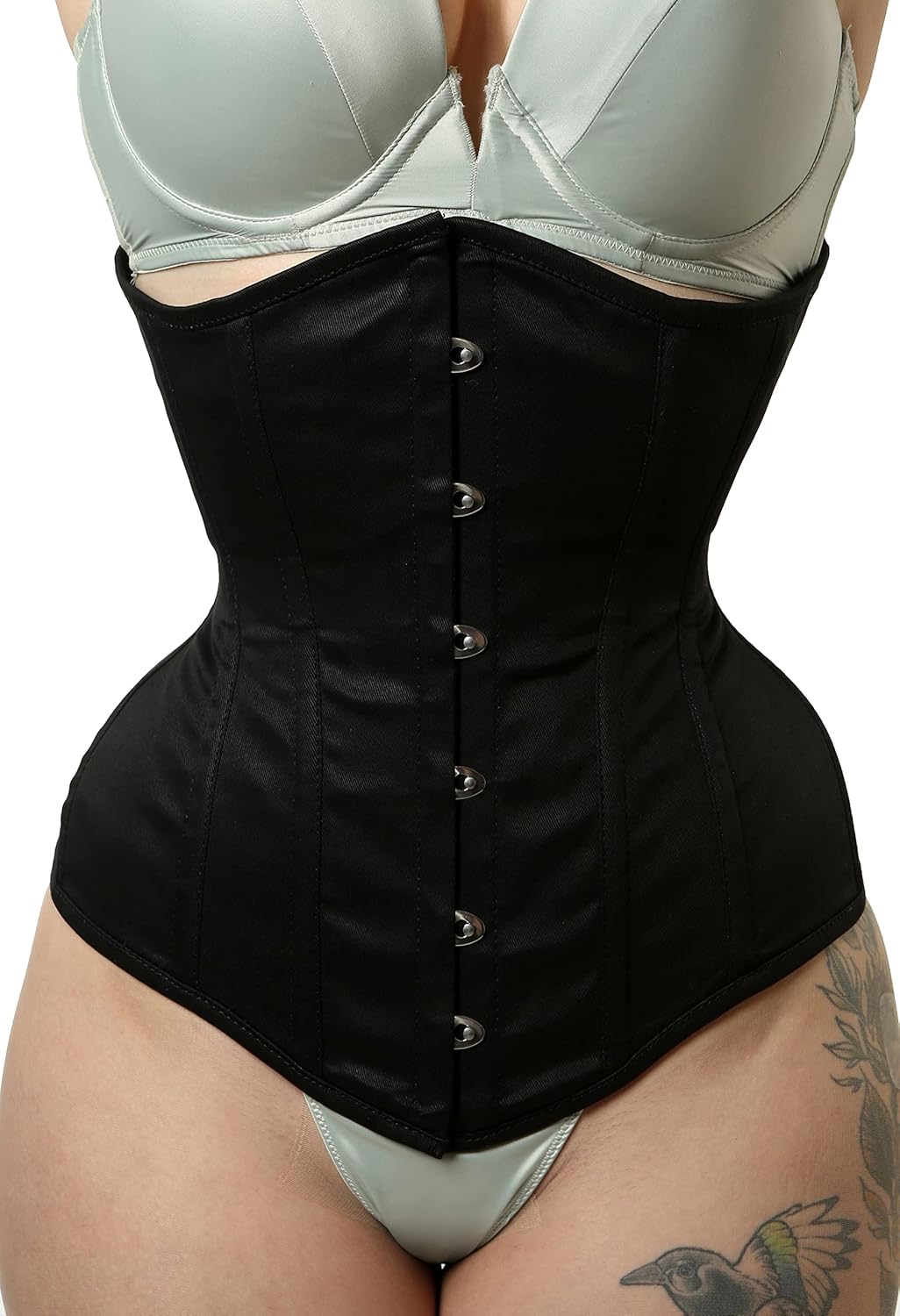


Womens Lingerie Guide: How to Fit, Wear, and Style an Underbust Corset Comfortably

A structured underbust corset can transform an outfit by defining the waist and adding texture without covering the bust. The key is understanding what the garment is designed to do—and recognizing when dramatic shaping has crossed the line into an uncomfortable fit.
What Makes an Underbust Corset Different
An underbust corset begins below the bust and extends across the waist and part of the torso. Unlike an overbust corset, it leaves the bust uncovered, making it particularly adaptable for layering with shirts, dresses, camisoles, and other garments.
Corsetry has a long relationship with changing fashion silhouettes. The Victoria and Albert Museum documents how historical corsets used structural elements such as busks, boning, cording, and lacing to shape the torso and support the fashionable silhouettes of different periods. Victoria and Albert Museum
Victoria and Albert Museum
Today's Womens Lingerie encompasses everything from lightweight decorative pieces to substantially structured garments. Understanding where a particular corset falls on that spectrum helps determine how it should fit and how long it feels comfortable to wear.
Understanding a Steel-Boned Corset
Consider a vintage-style floral jacquard underbust corset constructed with 14 steel bones and a five-button design. Those details make structure a central part of the garment rather than simply a decorative effect.
Boning helps a corset maintain its vertical shape and resist folding or bunching around the waist. Historically, corset makers used several structural materials, including baleen and metal, while later corsetry increasingly incorporated steel and other manufactured supports. Victoria and Albert Museum
Victoria and Albert Museum
More structure does not automatically mean that a corset should be tightened aggressively. A structured garment can create a defined silhouette through its construction without requiring maximum compression.
Start With Fit, Not Waist Reduction
A corset should follow your torso rather than force your body into a shape that immediately feels wrong. Pay particular attention to the ribs, waist, hips, and lower edge because discomfort in one area can become much more noticeable after extended wear.
When evaluating the fit:
Check that you can breathe comfortably and normally.
Look for excessive pressure at the ribs or hip bones.
Make sure the corset is not producing sharp or localized pain.
Sit down and check whether the lower edge digs into your body.
Move your arms and torso to test everyday mobility.
Stop tightening if you develop pain, numbness, tingling, dizziness, or difficulty breathing.
The goal is controlled structure, not enduring discomfort for the sake of a smaller-looking waist.
Layering Can Make a Major Difference
One practical technique borrowed from historical corsetry is placing a lightweight layer between the corset and skin. The V&A notes that historical corsets were worn alongside undergarments such as chemises, illustrating that corsetry was often part of a layered clothing system rather than necessarily being worn directly against bare skin. Victoria and Albert Museum
Victoria and Albert Museum
A smooth camisole or lightweight cotton top can reduce direct rubbing and create a barrier between the skin and seams, hardware, or textured jacquard fabric.
This can be especially useful for people with sensitive or dry skin. The American Academy of Dermatology notes that tight clothing can rub against and aggravate dry skin and recommends soft layers such as cotton or silk beneath rougher fabrics when irritation is a concern. American Academy of Dermatology
American Academy of Dermatology
Three Practical Ways to Style an Underbust Corset
The advantage of an underbust silhouette is that changing the garment underneath can completely change its character.
For an everyday layered outfit: Pair a floral jacquard corset with a simple blouse and straight-leg trousers. Keeping the surrounding pieces relatively understated allows the corset's pattern and structure to become the visual focus.
For an evening outfit: Layer the corset over a fitted dress or streamlined top. Repeating one of the corset's colors elsewhere in the outfit can make an ornate jacquard pattern feel intentional rather than costume-like.
For vintage-influenced styling: Combine the corset with a blouse featuring fuller sleeves and a flowing skirt. The contrast between a defined waist and softer surrounding fabrics references historical silhouettes without requiring a historically accurate outfit.
A Fit Check Before Leaving Home
Imagine someone planning to wear a steel-boned underbust corset to an evening event. Standing in front of a mirror for two minutes might suggest that everything fits perfectly, but sitting through dinner or walking for an hour creates a much more useful test.
A better approach is to wear the completed outfit around the house first. Sit in a dining chair, walk up stairs, bend naturally, and spend some time in the garment before deciding whether the adjustment feels appropriate.
If the corset becomes increasingly uncomfortable, loosen it rather than assuming discomfort is simply part of corset wear.
Watch Your Skin as Well as the Silhouette
Fit problems do not always appear as obvious pain. Persistent itching, redness, or irritation beneath a corset can indicate friction or sensitivity to something contacting the skin.
The American Academy of Dermatology notes that clothing fabrics, dyes, and metals can contribute to contact dermatitis in some people. It also recommends washing new clothing before wearing it when contact dermatitis is a concern. American Academy of Dermatology
American Academy of Dermatology
If redness, swelling, a persistent rash, sores, or other significant skin changes develop, discontinue wear and consider seeking medical advice rather than continuing to expose the irritated area.
Decorative Corsetry Versus Intensive Shaping
It helps to decide what you actually want from a corset before putting it on.
For many people, the objective is visual: a defined waist, vintage detailing, floral texture, or a striking layered outfit. In that situation, there is little reason to pursue extreme tightening when the garment's structure already provides much of the desired appearance.
Historically, corsetry itself changed in response to concerns about comfort and freedom of movement. The V&A documents late-19th-century reform corsets, including more flexible and ventilated designs, as changing attitudes challenged some restrictive approaches to dress. Victoria and Albert Museum
Victoria and Albert Museum
That history offers a useful modern lesson: structure and style do not have to depend on extreme restriction.
The Takeaway
A floral jacquard underbust corset can be an unusually versatile piece of Womens Lingerie because it combines visible structure with flexible layering possibilities. Focus first on correct fit, normal breathing, comfortable movement, and skin comfort; then use the corset's pattern and defined silhouette as the foundation for the rest of the outfit.
Before wearing a structured corset for several hours, give the complete outfit a realistic trial at home. A corset that still feels comfortable while sitting, walking, and moving is far more useful than one that looks impressive only while standing still.
Sources
Victoria and Albert Museum — Corsets, crinolines and bustles
Victoria and Albert Museum — Shaping the body: from corsets to bullet-bras
American Academy of Dermatology — Dermatologists' tips for relieving dry skin
American Academy of Dermatology — Contact dermatitis
LuckeLadybug
News
How to Plan a Seamless Trip to Your Final Destination Without Travel Friction


