
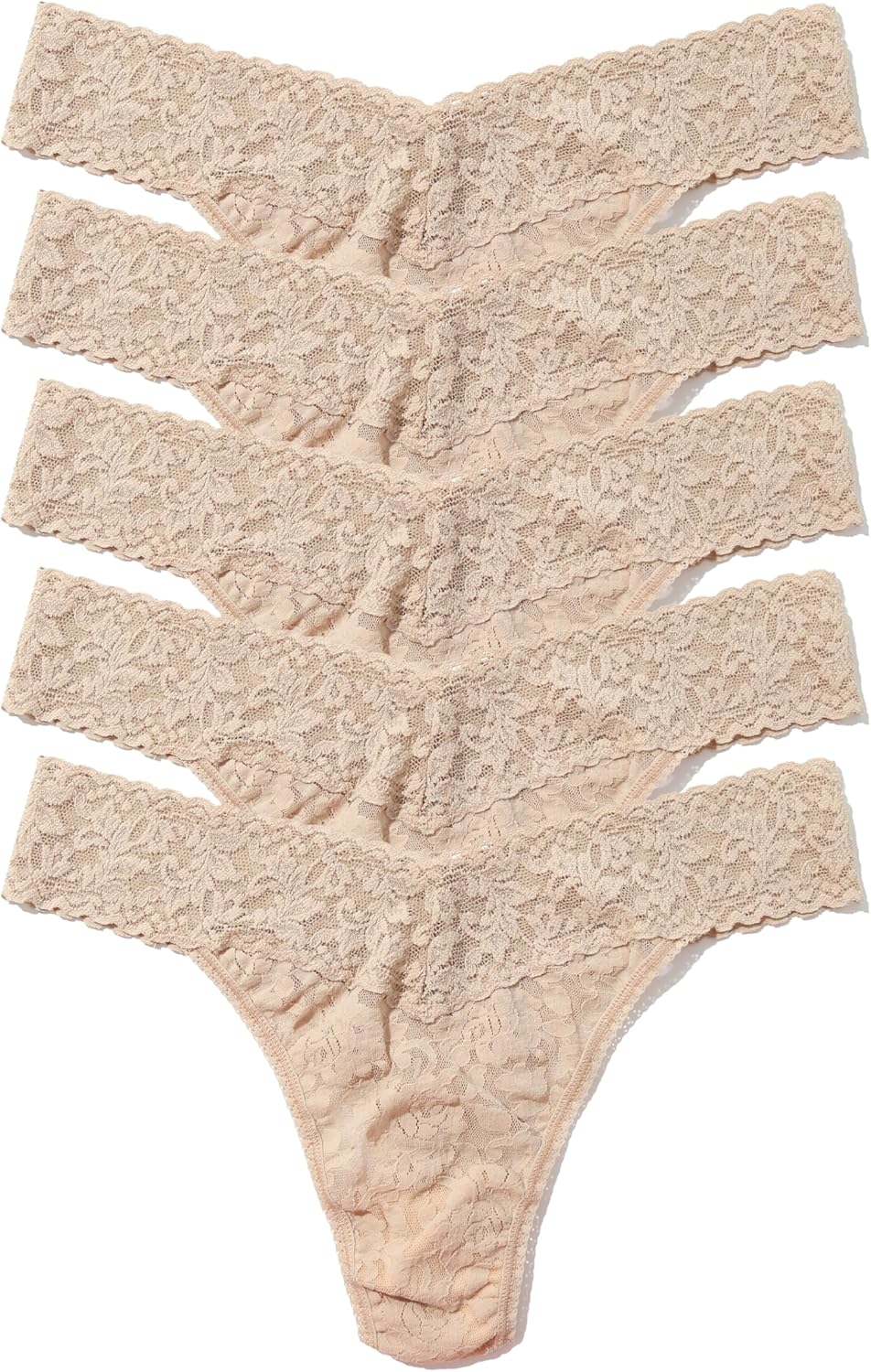


Womens Lingerie Guide: How to Choose Comfortable Low-Rise Thongs by Fabric, Fit, and Construction

Choosing underwear is less about chasing a particular style and more about understanding how fabric, fit, seams, and garment construction interact with your body. For shoppers exploring Womens Lingerie, a few practical checks can make it much easier to choose a thong that feels comfortable under everyday clothing.
Why Thong Construction Matters
A thong uses less rear fabric than briefs, bikinis, or boyshorts, but that does not make construction less important. Because the garment has relatively narrow contact areas, small differences in sizing, stretch, edge finishing, and seam placement can noticeably affect comfort.
A useful example is a hollow-out low-rise thong made from 92% nylon and 8% spandex. That combination illustrates two common lingerie design choices: a synthetic base material for a smooth, lightweight structure and elastane for stretch.
Decorative hollow-out detailing adds another consideration. Openwork can change the texture and flexibility of individual areas, so shoppers should evaluate the complete garment rather than assuming that every nylon-spandex thong will fit or feel the same.
Understanding Nylon and Spandex
Nylon is a manufactured fiber widely used in clothing and intimate apparel. The U.S. Federal Trade Commission maintains standardized generic fiber names—including nylon and spandex—used in textile fiber identification. Federal Trade Commission Textile Fiber Products Identification Act and Rules.
Spandex is valued for its elasticity. In an underwear blend, even a relatively small proportion can help a garment stretch and recover, although the actual performance depends on knitting, garment dimensions, elastic components, and construction—not fiber percentages alone.
When evaluating a nylon-spandex thong, consider:
Stretch and recovery: The fabric should accommodate movement without requiring excessive tension.
Surface texture: Smooth fabric can work well beneath close-fitting clothing, while decorative openwork may create more texture.
Edge construction: Waist and leg openings can matter as much as the main fabric.
Care requirements: Follow the garment's actual care label rather than assuming all synthetic lingerie can be washed identically.
What Low Rise Actually Changes
A low-rise thong is designed to sit lower on the torso than a higher-rise underwear style. This can make it useful beneath low-waisted trousers, skirts, shorts, or other garments where a higher waistband might become visible.
Rise is also a personal fit preference. Someone with a longer torso or different hip proportions may experience the same low-rise cut very differently from another wearer.
Instead of judging rise from the style name alone, compare the garment's available measurements with underwear that already fits you comfortably. Waist or hip guidance from the manufacturer is generally more useful than relying exclusively on a familiar size letter.
Fit Should Be Secure, Not Restrictive
Underwear needs enough tension to remain in position, but excessive tightness is not a sign of better support. Deep marks, persistent digging, bunching, chafing, or continual adjustment are practical clues that the size or cut may not suit the wearer.
The American Academy of Dermatology notes that chafing occurs when skin repeatedly rubs against skin or clothing and recommends properly fitting clothing as one way to help prevent it. American Academy of Dermatology — How to Prevent and Treat Chafing.
A simple fit check is to walk, sit, bend, and move normally after putting on a new style. If the waistband repeatedly rolls, the garment shifts significantly, or an edge creates uncomfortable pressure, a different size or silhouette may be the better solution.
Hollow-Out Designs Add Texture to the Equation
Hollow-out or openwork detailing can give lingerie a more visually distinctive appearance than a completely smooth knit. From a practical perspective, however, decorative construction can also affect how the fabric feels against skin and how noticeable it is beneath clothing.
For example, consider two low-rise thongs made with stretchy synthetic blends. A smooth, undecorated version may disappear more readily beneath fitted trousers, while a hollow-out design may provide more visual interest but potentially create additional surface texture.
Neither construction is universally better. The appropriate choice depends on whether the priority is a smooth appearance beneath clothing, decorative styling, or a balance of the two.
Do Not Confuse Openwork With Guaranteed Breathability
Terms such as mesh, perforated, hollow-out, and breathable are sometimes treated as interchangeable, but they describe different characteristics. Visible openings may increase airflow through particular sections, yet overall moisture and heat management depend on the complete textile structure, fiber blend, garment coverage, and conditions of use.
This is an important principle when comparing Womens Lingerie. Judge concrete specifications—such as fiber composition and construction—separately from subjective descriptions of how a garment might feel.
For a 92% nylon and 8% spandex hollow-out thong, for example, it is reasonable to identify the stretch blend and decorative openwork. It would be less reliable to predict exactly how cool or dry the garment will feel for every wearer without performance testing.
The Gusset Deserves Special Attention
The gusset is the section of underwear that sits against the genital area, and its material may differ from the main body of the garment. If gusset composition is important to you, check the garment specifications or label rather than assuming it matches either the main fabric or a description elsewhere.
The American College of Obstetricians and Gynecologists advises wearing cotton underwear and avoiding clothing that traps heat and moisture as part of its guidance on vulvovaginal health. ACOG — Vulvovaginal Health.
That guidance makes material transparency particularly useful when choosing intimate garments. A product may have a predominantly synthetic outer construction while incorporating a different gusset, so the exact specification matters.
A Practical Comparison Example
Imagine someone wants underwear for two different outfits: fitted trousers during the day and a loose dress later in the week.
For the fitted trousers, the shopper might prioritize smooth edges, minimal surface texture, and a rise that remains below the trouser waistband. A highly textured hollow-out design could be less desirable if its pattern becomes visible through thin fabric.
With the loose dress, visibility through the outer garment is less important. The shopper can instead emphasize preferred appearance, stretch, rise, and personal comfort.
This example demonstrates why there is no single "best" thong. The better question is whether a particular combination of material, construction, rise, and fit matches its intended use.
How to Evaluate a Thong Before Choosing It
A quick five-step assessment can eliminate much of the guesswork:
Check the fiber composition. Identify the main material and stretch fiber rather than relying solely on descriptive terms.
Confirm the rise. Decide whether low, mid, or high rise works with both your body and intended clothing.
Look at construction. Note openwork, mesh panels, seams, elastic edges, and other details that could affect texture.
Review available measurements. Compare them with a well-fitting garment whenever possible.
Consider the intended outfit. Smoothness may matter under fitted clothing, while decorative texture may be irrelevant under looser garments.
After wearing the garment, comfort remains the final test. A theoretically ideal material blend cannot compensate for a cut that repeatedly digs, rubs, shifts, or otherwise feels uncomfortable.
Care Can Affect Fit and Longevity
Textile care instructions are not merely suggestions about cleanliness. Washing, drying, ironing, and bleaching conditions can affect fibers, elastic components, finishes, and ultimately garment fit.
The FTC's Care Labeling Rule requires covered textile wearing apparel to carry care instructions and addresses washing, drying, ironing, bleaching, and related care information. Federal Trade Commission — Care Labeling Rule.
For lingerie, use the instructions on the specific garment. Avoid assuming that a method suitable for one nylon-spandex item is automatically appropriate for another, since elastic, trim, dyes, decorative construction, and other components can differ.
When Comfort Problems Are More Than a Fit Issue
Occasional pressure from poorly fitting underwear can often be addressed by changing size, cut, or fabric. Persistent itching, burning, unusual discharge, sores, significant irritation, or recurring discomfort should not simply be attributed to lingerie.
ACOG recommends discussing vulvovaginal symptoms with an obstetrician-gynecologist or other health care professional when appropriate. ACOG — Vulvovaginal Health.
Changing underwear may remove a source of friction, but it is not a substitute for medical evaluation when symptoms persist.
The Takeaway
A good low-rise thong should work with your body rather than constantly reminding you that you are wearing it. Start with verifiable details—fiber composition, rise, construction, gusset material when available, measurements, and care instructions—and then consider how the garment will work beneath your intended clothing.
A 92% nylon and 8% spandex hollow-out low-rise thong is a useful example: the stretch blend, low-rise silhouette, and decorative openwork each contribute something different to the garment. Understanding those individual characteristics makes Womens Lingerie easier to evaluate based on comfort and intended use instead of relying on style terminology alone.
Sources
American College of Obstetricians and Gynecologists — Vulvovaginal Health
American Academy of Dermatology — How to Prevent and Treat Chafing
Federal Trade Commission — Care Labeling Rule
Federal Trade Commission Textile Fiber Products Identification Act and Rules
LuckeLadybug
News
How to Plan a Seamless Trip to Your Final Destination Without Travel Friction


