


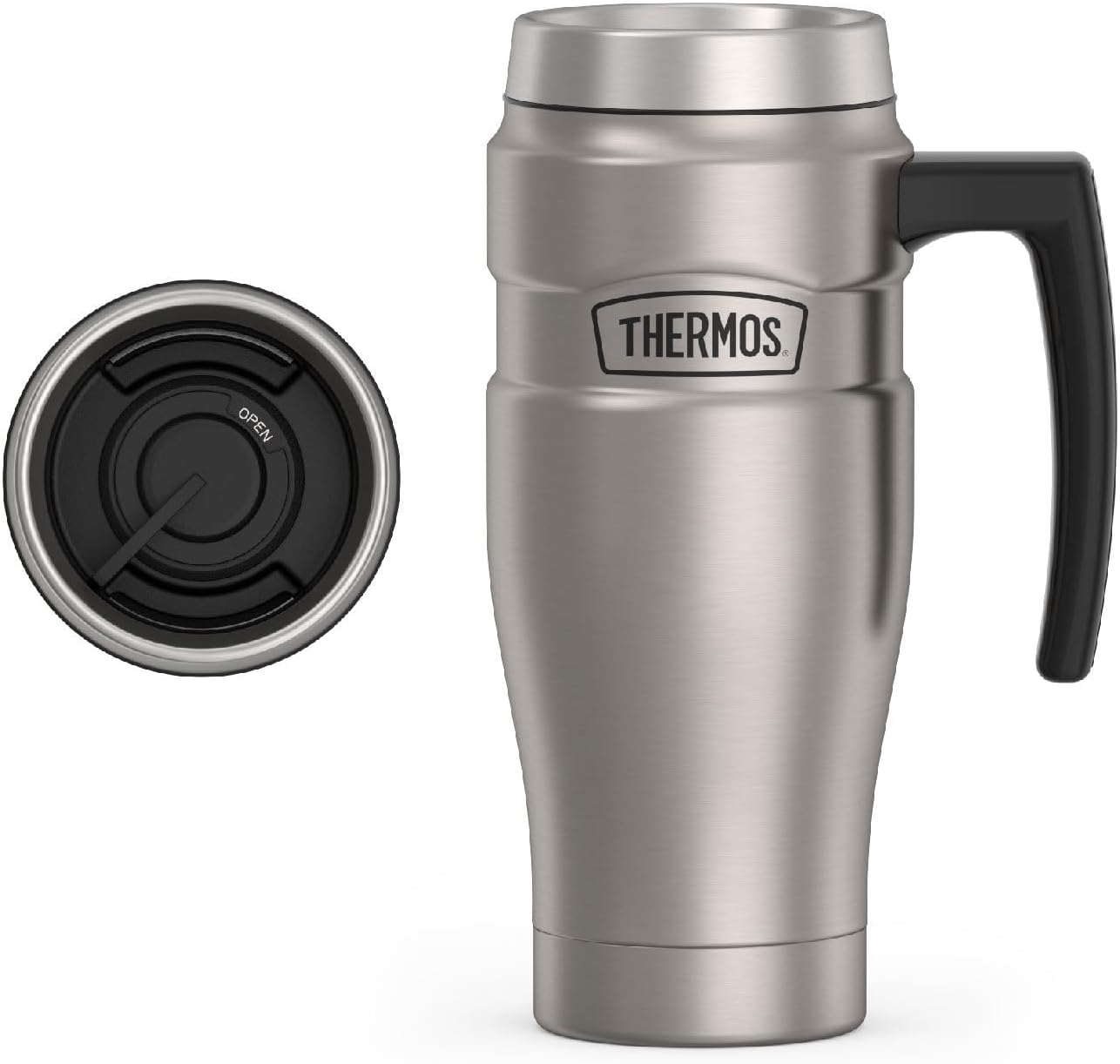


Insulated tumblers: The Physics of Thermal Retention: How Precision Engineering Keeps Drinks Hot and Cold

Maintaining your beverage at an optimal temperature for hours on end is a modern convenience driven by strict thermodynamics. Without a solid understanding of how heat transfer works, drinkware choices often come down to guesswork rather than material science.
The Three Mechanisms of Heat Transfer
Thermal energy naturally moves from warmer environments to cooler ones through three distinct physical processes. Understanding these pathways clarifies why ordinary containers fail to preserve liquid temperatures over extended periods.
Conduction: Thermal energy travels directly through solid materials via molecular contact, meaning a single-wall cup quickly transfers heat from hot coffee straight into your hand.
Convection: Heat moves through the circulation of fluids and gases, allowing warm air currents to steal heat away from an open or poorly sealed vessel.
MODOFO Tumbler
Radiation: Infrared energy radiates across space from warm surfaces, slowly altering the internal temperature of a container regardless of ambient air.
Chilly Moose
How Vacuum Insulation Stops Thermal Flow
The core defense against unwanted temperature change is the complete removal of matter between two structural barriers. High-performance insulated tumblers utilize a dual-wall configuration where the air is evacuated from the intermediate gap during manufacturing.
MODOFO Tumbler
By eliminating gas molecules from this inner chamber, the medium required for conduction and convection is entirely removed. With no air particles to ferry thermal energy across the gap, the inner chamber remains thermally isolated from the outside shell.
Blog - Service Ideas
+ 1
Material Science and Structural Integrity
Engineering a durable vessel requires matching advanced physics with resilient materials like food-grade stainless steel. For example, a 20 oz Skinny Straight Vacuum Insulated Stainless Steel Tumbler relies on high tensile strength metal to withstand continuous atmospheric pressure while maintaining microscopic clearance gaps.
Because stainless steel possesses low thermal conductivity relative to other metals, it minimizes stray heat transfer at the crucial rim and base contact points. This structural approach ensures that the outer wall remains neutral to the touch, preventing both exterior condensation and hand fatigue.
Thermos
Maximizing Daily Thermal Performance
Preserving the structural integrity of your drinkware ensures consistent, long-term temperature retention. Avoiding severe impacts on hard surfaces protects the microscopic vacuum seal from developing structural micro-fractures. Choosing hand-washing over aggressive high-heat dishwasher cycles also safeguards the thermal barrier and exterior finishes against premature degradation.
Chilly Moose
+ 1
Adopting these maintenance habits guarantees that your container delivers peak performance throughout years of daily use.
Sources
Thermos: How Vacuum Insulation Works
Thermos
Chilly Moose: How Vacuum-Insulated Tumblers Work
Chilly Moose
Modofo: Double-Wall Vacuum Insulation Explained
LuckeLadybug
News
Experiencing the Magic of Cruz Azul: A Fan's Guide to Mexico's Iconic Soccer Club


