



Cosplay for Kids: How to Choose a Light-Up Princess Costume That Is Fun, Comfortable, and Safer

Cosplay for Kids: How to Choose a Light-Up Princess Costume That Is Fun, Comfortable, and Safer
A glowing princess dress can turn an ordinary birthday, costume party, or afternoon of pretend play into something memorable. For parents, though, successful Cosplay is about more than sparkle—it means choosing a costume that lets a child see clearly, move comfortably, and enjoy the experience without unnecessary hazards.
Why Light-Up Costumes Add Something Special
Children's costume play combines imagination with movement. A princess-style dress with a cape and LED lighting adds a visual effect that can make entrances, photographs, dances, and imaginative play feel more theatrical.
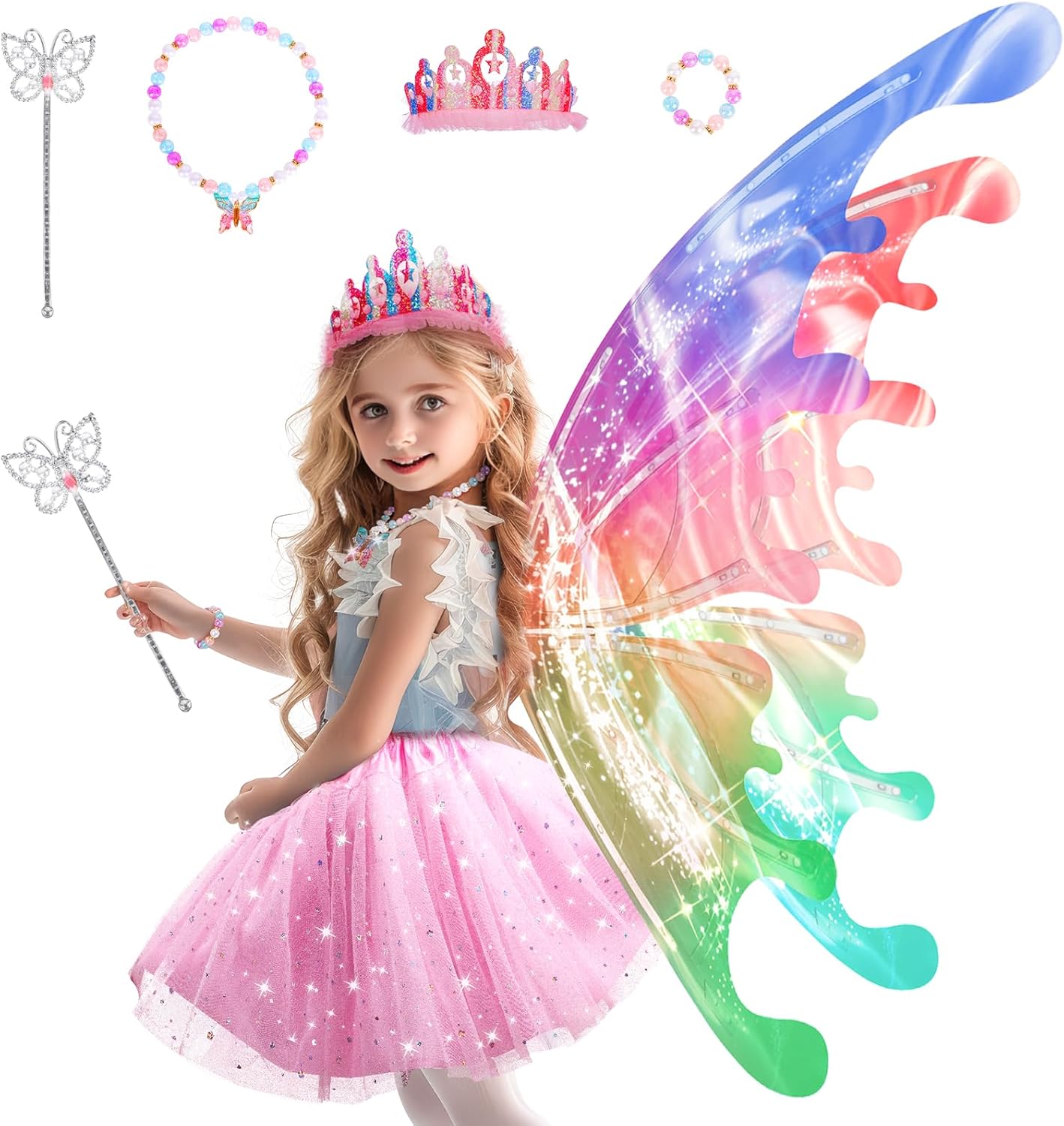
A Girls LED Light Up Princess Costume Dress with Cape is a useful example of this type of outfit. The combination of an illuminated dress and coordinating cape creates a complete fantasy look without requiring numerous separate costume pieces.
The lighting should still be treated as a decorative feature rather than a substitute for safety equipment. When children will be outdoors after dark, established safety guidance recommends additional visibility measures such as reflective material, flashlights, or glow sticks.
Start With Fit and Freedom of Movement
An impressive costume quickly becomes frustrating if a child has to hold up the skirt every time she walks. Before an event, have the child wear the complete outfit—including shoes and cape—and practice normal movements.
Check whether she can comfortably:
Walk forward and turn without stepping on the hem.
Go up and down stairs while supervised.
Sit and stand without becoming tangled in the costume.
Move both arms freely.
See the ground directly ahead.
Wear the cape without it interfering with movement or vision.
The American Academy of Pediatrics advises that children's costumes and shoes should fit properly and that costumes should be short enough to reduce tripping and snagging hazards. The organization also advises checking hats, masks, and similar accessories to ensure they don't obstruct vision. American Academy of Pediatrics
Give the Cape Its Own Safety Check
A cape creates flowing movement that works particularly well with a princess costume, but it also deserves extra attention. Check its length, attachment points, and position around the neck before extended play.
The U.S. Consumer Product Safety Commission has specifically cautioned against large capes, billowing skirts, and other costume elements that can increase exposure to ignition sources. Its guidance also emphasizes costumes that fit well and do not obstruct a child's view. U.S. Consumer Product Safety Commission
For younger children especially, a caregiver should make sure the cape does not drag under the child's feet, cover the face, or catch easily on furniture, playground equipment, door handles, or decorations.
Treat LED Lighting as an Extra Feature, Not Visibility Gear
A light-up dress can be visually striking in a dim room or during an evening celebration. It is tempting, however, to assume that illuminated costume details automatically make a child sufficiently visible outdoors.
Don't make that assumption.
The National Safety Council recommends reflective tape on costumes and bags or glow sticks when children are outside after dark. It also recommends choosing costumes that do not create safety hazards and keeping children's vision unobstructed. National Safety Council
For evening activities, think in layers: the LEDs provide the decorative glow, while reflective elements and a flashlight or glow stick provide additional visibility.
Inspect the Light-Up Components Before Dressing
Any costume containing powered decorative elements deserves an additional pre-wear inspection. The goal is simple: make sure everything is intact before the child starts running, dancing, sitting, or playing.
Before use:
Inspect the lighting components and any accessible wiring for visible damage.
Make sure the power or battery compartment is securely closed.
Check that no hard component presses uncomfortably against the child's body.
Confirm that wires or lighting elements cannot easily catch on fingers or accessories.
Follow the product's supplied instructions for batteries, operation, cleaning, and storage.
Stop using the lighting feature if you notice damage, unusual heat, leakage, or another apparent defect.
Never assume that a decorative lighting system is waterproof unless its instructions specifically say so. The safest approach is to follow the manufacturer's directions rather than improvising around electrical components.
Keep Costumes Away From Open Flames
LED illumination has another practical advantage: it creates a glowing effect without requiring candles or other flames near the costume. That does not eliminate the need for fire awareness elsewhere at a party or celebration.
CPSC recommends looking for flame-resistant costume labeling and keeping costumes away from candles and other ignition sources. The agency also recommends battery-operated flameless candles or glow sticks in places accessible to children rather than open-flame alternatives. U.S. Consumer Product Safety Commission
This is particularly relevant to princess costumes because skirts and capes may extend farther from the body than everyday clothing. Keep candlelit decorations well away from areas where costumed children will walk or play.
Match the Costume to the Activity
The same costume may work differently depending on the event. A flowing dress that is comfortable for photographs at an indoor birthday party may require additional adjustments for outdoor walking.
For an indoor birthday or costume party, prioritize comfortable movement, temperature, and enough room for children to play without catching capes or skirts on furniture.
For outdoor evening activities, add visibility checks, comfortable walking shoes, reflective elements, and appropriate supervision.
For imaginative play at home, consider whether the child can independently move, sit, and play in the costume without repeatedly stepping on the skirt or cape.
For photos and special entrances, the complete cape-and-lighting combination can provide maximum visual impact, after which cumbersome accessories can be removed if they interfere with active play.
A Practical Example: The Five-Minute Dress Rehearsal
Imagine a child preparing for an evening costume party in a light-up princess dress with a cape. Instead of discovering problems after leaving home, a parent conducts a five-minute rehearsal.
The child walks down a hallway, turns around, sits in a chair, climbs a few supervised steps, raises both arms, and looks down at her feet. The parent then checks the cape, hem, shoes, lighting components, and visibility from several angles.
Suppose the skirt catches under a shoe during the test. That is valuable information: the outfit needs adjustment before the event rather than after a fall.
This quick rehearsal is especially worthwhile for elaborate Cosplay because decorative clothing can behave very differently in motion than it does while a child is standing still.
Comfort Matters More Than Staying in Character
Children often tolerate an uncomfortable outfit longer than they should because they are excited about the event. Parents can help by making costume breaks normal rather than treating them as interruptions.
Watch for complaints about itching, pinching, excessive warmth, restricted movement, or uncomfortable costume components. If a cape, accessory, or lighting element becomes bothersome, removing that component is better than insisting on preserving the complete look.
For very young children, the American Academy of Pediatrics recommends checking that a child can see, breathe, walk, and move their arms easily while wearing a costume. American Academy of Pediatrics
The Best Costume Is One a Child Can Actually Enjoy
A successful light-up princess costume balances spectacle with practicality. The glowing details and cape create the fantasy, while good fit, clear vision, secure components, comfortable footwear, fire awareness, and appropriate visibility help the child enjoy it.
Before the next party or dress-up adventure, do one complete costume rehearsal in the conditions that most closely resemble the actual event. Five minutes of walking, sitting, turning, and checking the outfit can reveal problems that are almost impossible to spot from a photograph alone.
Sources
U.S. Consumer Product Safety Commission
American Academy of Pediatrics — HealthyChildren.org
American Academy of Pediatrics — Babies & Toddlers Halloween Safety
Replace malformed citation links
Clarify the costume’s stated specifications
LuckeLadybug
News
How to Plan a Seamless Trip to Your Final Destination Without Travel Friction


